
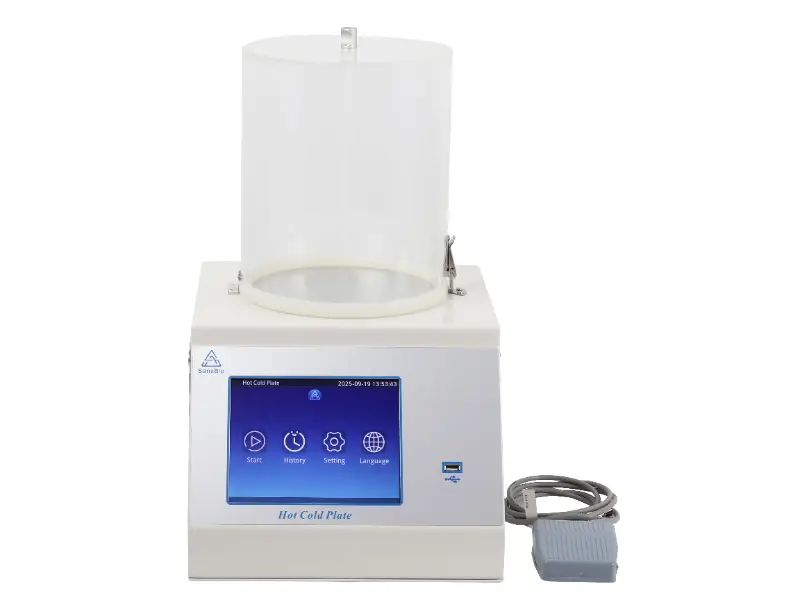
Thermal pain research requires researchers to select testing methods that match their experimental objectives. Although hot plate and cold plate assays are both widely used to evaluate pain-related behaviors in rodents, they stimulate different sensory responses and provide different types of data. Choosing the right assay is important for neuroscience, behavioral pharmacology, and pain mechanism studies. BioMed Easy develops life science instruments and software solutions that support animal behavior and physiological research.
Start With the Pain Model Before Selecting a Thermal Assay
The selection between hot plate and cold plate testing should begin with the research question rather than the equipment. Different pain models involve different sensory mechanisms, so the selected assay needs to reflect the biological response being studied.
For acute thermal pain studies, scientists often evaluate behavioral reactions to controlled temperature stimulation. These experiments commonly evaluate nociceptive sensitivity and analyze how animals respond to controlled thermal challenges.
For neuropathic pain or sensory dysfunction studies, researchers may focus on abnormal sensory responses instead of normal pain perception. In these cases, evaluating cold sensitivity can provide important information about changes in pain pathways.
Understanding the study objective helps researchers determine whether heat-based or cold-based stimulation is more suitable.
Hot Plate and Cold Plate Assays Measure Different Thermal Responses
Hot plate and cold plate assays differ mainly in the type of thermal stimulation they provide.
The hot plate assay uses a controlled heated surface to evaluate responses to heat stimulation. Researchers commonly record behaviors such as paw withdrawal, paw licking, or jumping. The reaction time before these responses occur is often used to assess heat sensitivity and pain response.
The cold plate assay uses controlled low-temperature stimulation to evaluate cold-related behaviors. Researchers may observe withdrawal responses, avoidance behavior, or changes in sensitivity. This method is particularly useful for studying cold hypersensitivity and sensory abnormalities.
Although both methods evaluate thermal pain behavior, they reveal different aspects of sensory function. Hot plate testing cannot fully replace cold plate testing because heat and cold involve different physiological mechanisms.
Comparing Hot Plate and Cold Plate Applications in Research
The most suitable assay depends on the type of pain research being conducted.
In acute pain studies, hot plate testing is frequently used to evaluate heat-induced nociceptive responses. It is often applied in analgesic screening and experiments investigating changes in thermal pain sensitivity.
Cold plate testing is more suitable when researchers investigate abnormal responses to cold stimulation. In neuropathic pain models, nerve injury may cause increased cold sensitivity, making cold plate evaluation valuable for studying altered sensory processing.
For pharmacological research, both methods may be considered depending on the mechanism of the tested compound. A treatment that affects heat sensitivity may not necessarily influence cold hypersensitivity.
Key Differences in Experimental Design and Data Interpretation
The differences between hot plate and cold plate assays extend beyond temperature settings. Their experimental designs and data interpretation methods also vary.
Hot plate studies commonly focus on response latency, measuring the time required for animals to display protective behaviors. This makes consistent observation and timing procedures important for reliable results.
Cold plate studies often focus on changes in sensitivity, including withdrawal responses and avoidance behaviors. Researchers may compare behavioral differences between control and experimental groups to evaluate changes in cold perception.
The interpretation of results should match the purpose of the study. Hot plate data mainly reflects heat nociception, while cold plate data provides information about cold sensitivity and related pain mechanisms.
Factors That Influence Thermal Pain Assay Reliability
Reliable thermal pain research requires careful control of experimental conditions.
Temperature stability is one of the most important factors. Accurate heating or cooling control ensures that behavioral differences are related to biological responses rather than equipment variation.
Animal-related factors should also be considered. Species, strain, age, and previous handling experience may influence pain-related behaviors. Consistent animal preparation helps improve comparison between experimental groups.
Clear response criteria are equally important. Researchers should define behavioral endpoints before testing and maintain consistent observation methods throughout experiments.
A reliable hot plate apparatus should provide stable temperature control and support repeatable behavioral measurements for different pain research applications.
Selecting a Thermal Pain Testing System for Research Needs
The choice of testing equipment can directly influence experimental consistency. Researchers should evaluate several factors when selecting a thermal pain testing system.
Temperature accuracy is essential because stable thermal stimulation supports reliable behavioral analysis. Equipment should maintain consistent conditions throughout repeated experiments.
Testing flexibility is also valuable because laboratories may work with different animal models and research protocols. A suitable system should support various experimental requirements while maintaining measurement reliability.
Efficient data collection can further improve workflow. Clear behavioral observation and accurate recording help reduce manual errors and simplify comparison between research groups.
The Hot/Cold Plate Test system from BioMed Easy is designed for evaluating thermal pain responses in laboratory animals. It supports controlled temperature stimulation for neuroscience, behavioral pharmacology, and pain-related research applications.
When selecting a hot plate apparatus, researchers should consider the pain model, experimental objectives, and expected behavioral responses to ensure the assay fits their research needs.
A Practical Guide to Choosing Between Hot Plate and Cold Plate Testing
The choice between hot plate and cold plate testing depends on the specific goals of the experiment.
Hot plate testing is generally suitable for:
- Heat sensitivity evaluation.
- Acute thermal pain studies.
- Analgesic response assessment.
Cold plate testing is often more appropriate for:
- Cold hypersensitivity research.
- Neuropathic pain models.
- Altered sensory response studies.
For studies investigating broader pain mechanisms, combining both methods may provide a more complete understanding of thermal sensitivity changes. Using complementary assays allows researchers to analyze different aspects of pain behavior.
Integrating Thermal Pain Assays into Preclinical Research Workflows
Hot plate and cold plate assays are complementary approaches for studying thermal pain responses. Hot plate testing provides information about heat-induced nociception, while cold plate testing helps researchers investigate cold sensitivity and sensory abnormalities.
The most appropriate assay depends on the pain model, research objectives, behavioral endpoints, and data requirements. Stable temperature control, standardized procedures, and suitable equipment selection are essential for producing reliable results.
BioMed Easy specializes in life science instruments and software for animal behavior, neuroscience, pharmacology, and physiological research. Its Hot/Cold Plate Test system supports controlled thermal stimulation and behavioral evaluation for universities, research institutions, CROs, and pharmaceutical companies, helping researchers establish consistent pain research workflows.
