
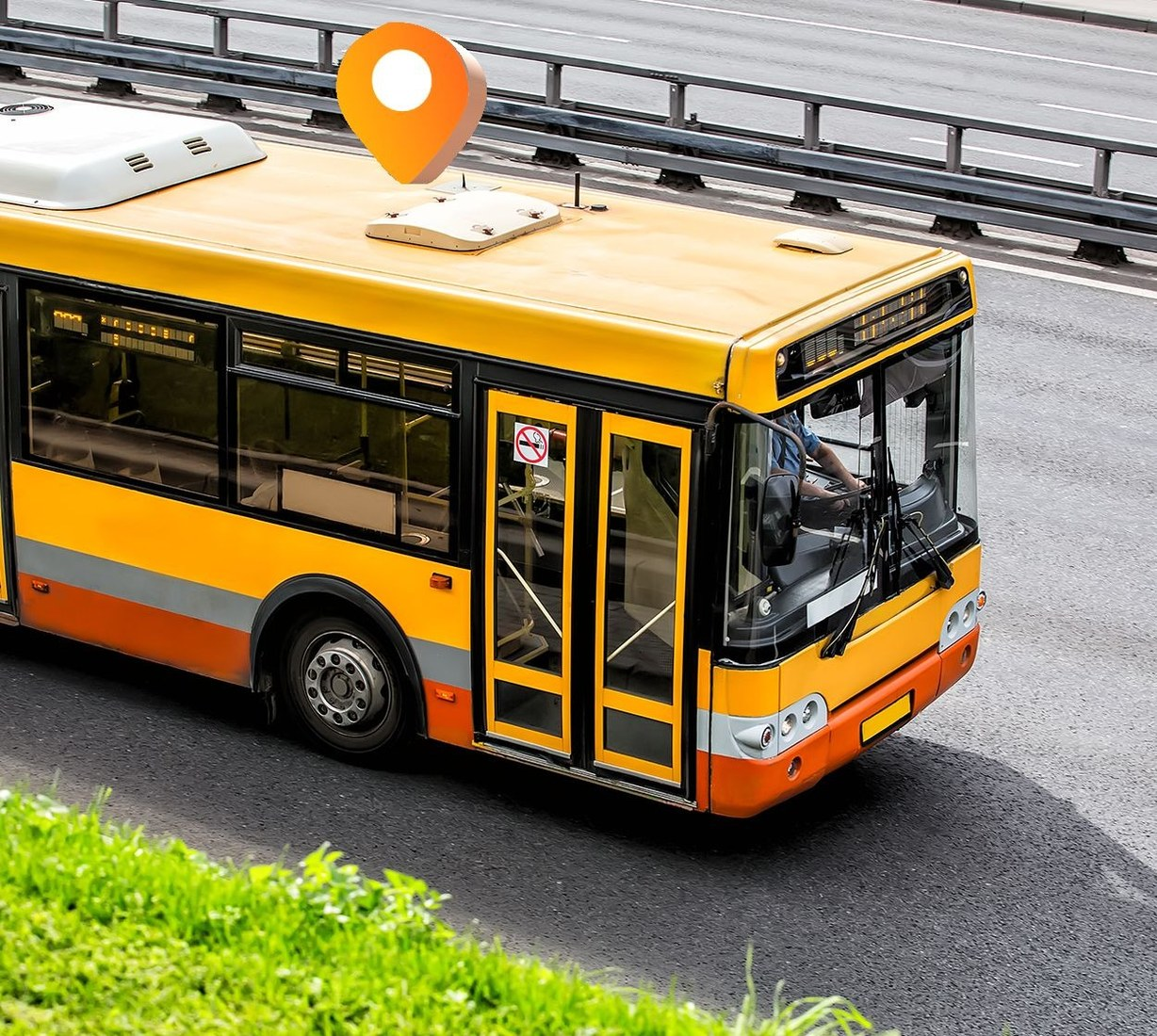
Real-time monitoring in a bus fleet is useful only when it improves a decision that must be made while service is operating. A public transportation system may need continuous location data, route adherence, delay visibility, driver-safety events, onboard video, and vehicle status. The technical challenge is to bring those sources together without forcing dispatchers to switch between unrelated tools.
For that reason, bus management software should be evaluated as an operational interface rather than as a map alone. It needs to help control-room staff identify exceptions, confirm what is happening, communicate with the appropriate team, and preserve records for later analysis.
Make Vehicle Position Useful to Dispatch
Location information is the foundation of most live transit workflows. Dispatchers need to see whether buses are on the assigned route, whether headways are widening, where delays are accumulating, and whether a vehicle has stopped unexpectedly. GPS data can also support geofenced depots, terminals, or restricted areas and provide a consistent route history for performance review.
The system becomes more useful when it distinguishes routine variation from conditions that require attention. A bus running several minutes behind schedule may need intervention only when the delay threatens a connection or creates a service gap. Similarly, an unscheduled stop may be harmless in traffic but more significant when it persists outside a designated area. Alert logic should reflect the transit operator’s service rules.
A modern public transportation system also needs data continuity between shifts and departments. Dispatch, maintenance, safety, and customer-service teams may each use different parts of the same record. Vehicle IDs, time stamps, route numbers, and event categories should therefore be standardized so that incidents can be traced without manual reconciliation.
Communications reliability should be included in the operating design. Buses move through tunnels, dense urban areas, depots, and coverage gaps, so onboard devices need a sensible strategy for buffering and forwarding data after a temporary loss of network service. Dispatchers should also be able to distinguish a network interruption from an actual vehicle or hardware fault.
Monitor Safety Without Isolating Video from Operations
Video adds information that a location trace cannot provide. Road-facing cameras can document traffic conditions and collisions, interior cameras can support passenger-safety investigations, and driver-facing monitoring can help identify fatigue or distraction when the selected hardware supports those functions. Continuous manual viewing of every bus may not be practical; the operational value lies in faster access to relevant footage after a defined event.
Event-driven video can also help operations teams separate system issues from human or environmental causes. A route deviation might result from a road closure, an emergency instruction, or an unauthorized detour. A harsh maneuver may reflect unsafe driving or a necessary response to another road user. Linking the video clip with GPS and alert data gives supervisors a more complete record.
Within public-bus projects, BSJ Technology describes a solution around real-time tracking and intelligent scheduling, passenger and driver monitoring, cabin visibility, and data analysis. Its broader commercial-market positioning includes hardware engineering, OEM/ODM support, and integration with third-party fleet platforms. Those capabilities are relevant when a transit authority or integrator must connect new onboard devices to an established control center rather than replace the entire software environment.
Passenger-related monitoring requires governance as well as technology. Transit operators should define authorized users, the conditions under which interior footage may be viewed, retention periods, and procedures for exporting evidence. These controls help maintain appropriate access to video and keep its use tied to legitimate operational and safety purposes.
Control-room design should avoid alert overload. Operators can rank events by urgency, route criticality, and safety impact so that a missed stop is not handled in the same way as a collision warning or passenger emergency. Escalation rules then determine when supervisors, dispatchers, or maintenance staff receive the event.
Design the Platform Around Daily Transit Workflows
A deployment plan should begin with the control-room workflow. Each alert requires an owner, a priority, and a response rule. Device health should also be visible because a camera or tracker that silently goes offline can create a monitoring gap. As the fleet expands across depots, centralized configuration and firmware governance become more important to maintenance efficiency.
Historical reporting in bus management software also needs to be accessible enough for routine service reviews. Route adherence, overspeed events, recurring delays, incident clips, and vehicle availability can be summarized by line, depot, vehicle, or period. The same data can support training and maintenance when governance rules define who may access it and how long it is retained.
Real-time bus monitoring is therefore a combination of field hardware, communication, software, and operating discipline. The most effective system does not simply show where buses are; it helps the organization recognize exceptions and respond consistently. At procurement stage, the priority is a scalable architecture that combines location, video, alerts, and support while fitting the procedures already used to run the network.
A limited deployment across several bus models and routes can evaluate BSJ Technology against these operating needs. Installation time, camera coverage, GPS continuity, event accuracy, remote diagnostics, and platform integration provide measurable deployment benchmarks. This approach also gives integrators a practical basis for assessing the supplier’s technical support and customization capability before a wider fleet conversion.
