
For Indonesian AI data center operators evaluating a solid state transformer, serviceability depends on where the system can isolate a fault and which parts can be replaced while it remains in service. EnerAI lists medium- and low-voltage isolation and low-voltage hot-swap for EnerNeo, its transformer for direct medium-voltage AC to 800V DC conversion. Those features describe different aspects of the design. The operating result depends on the exact model, the loads it serves and how much usable capacity remains when a module is unavailable [1].
Voltage isolation and hot-swap address different operating needs
Isolation establishes a boundary between parts of an electrical system. Hot-swap describes replacing a designated module under the manufacturer’s documented operating conditions while the relevant section remains in service. EnerAI lists the former under reliability and the latter under maintenance. For the proposed installation, an electrical drawing and the approved service documentation should identify the relevant boundaries, the eligible modules and the events that call for a wider outage.
A low-voltage module replacement is one operating case. The engineering team needs to know which remaining modules can support the load, which maintenance procedures apply and how site staff can verify that capacity before work begins. A failure in a shared control function, a different enclosure or a common connection can have a different effect on the same load. Reviewing those cases separately helps the operator plan around the equipment and distribution paths that remain available in each one [2].
Model-specific documentation shows what capacity remains during service
For the EnerAI solid state transformer, the model-specific single-line and module schedule should show the medium-voltage section, the low-voltage section and anything shared between them. The available load rating with one module removed is particularly relevant. Site teams also need to understand the effect of a second fault before the first module is restored, how the control system will report that event and what evidence operators can review before the system returns to its normal configuration. The supplier’s operating and maintenance documents establish which conditions apply to the quoted model [2].
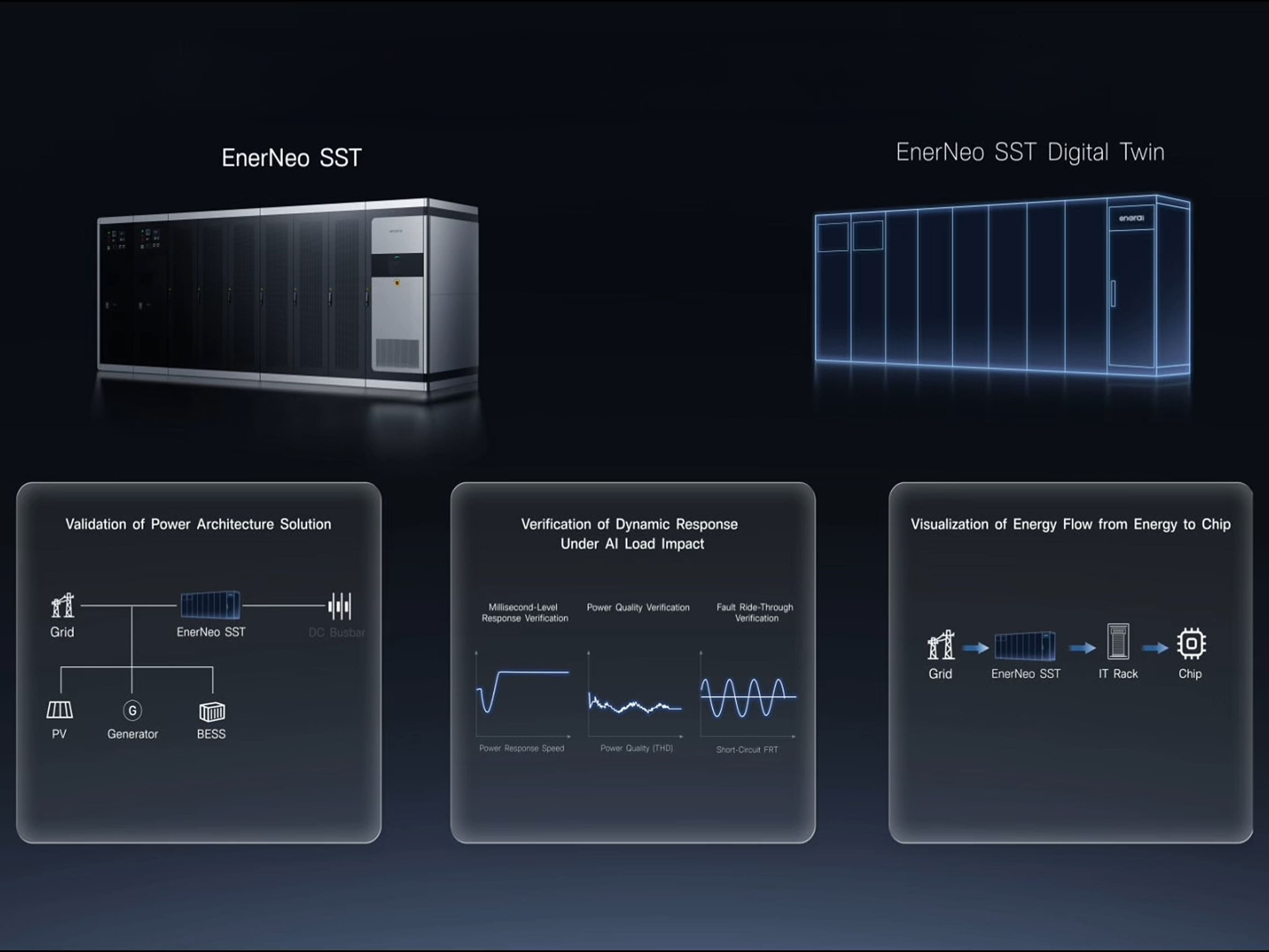
EnerNeo Digital Twin
EnerAI also publishes values for availability and maintenance. Their relevance to an Indonesian installation depends on the system boundary and the assumptions used in the offer. An equipment figure may cover a specific configuration with defined redundancy, spare parts and restoration times. The project may have additional shared components or different service arrangements. The underlying assumptions let the owner assess how closely the published figure matches the proposed installation [1].
Local service and spare modules support the Indonesian operating plan
EnerAI publicly lists commissioning, preventive maintenance, training, spare parts and 24/7 remote support. A site-specific service plan should name the organization providing support, its coverage hours, on-site response targets and the location of the modules that affect recovery. For work the operator can perform locally, the plan can identify the approved procedure, required training and responsibility for witnessing a replacement demonstration. These commitments determine how the stated maintenance features translate into practice at the Indonesian site.
Spares and training are especially relevant if multiple units are deployed. The service plan should establish whether the units use the same replacement modules and whether the same on-site procedures apply throughout the facility. An owner can then assess the stock and training it needs against the configuration it actually intends to install.
Fault recordings and alarms give operations teams context for troubleshooting
EnerAI describes online insulation monitoring, fault waveform recording and root-cause localization on the EnerNeo product page. Model tables also list RS485 and Ethernet communications with Modbus RTU and Modbus TCP. The protocols identify available ways to communicate. The points list and controls documents establish what the site can see through them. For the Indonesian installation, those documents should distinguish locally available diagnostics, alarms delivered to the site monitoring system and information a remote support team can use to determine which module needs attention.
A representative alarm can show how those capabilities translate into an operating procedure. The control room should be able to identify the affected section and the load remaining in service, then reach the appropriate service contact with the relevant records. The maintenance plan should also say who can authorize work and who confirms that the system has returned to its normal configuration. Those responsibilities are particularly important where the operator and the equipment service provider use different monitoring tools or maintain separate incident records.
Safety, maintenance and diagnostics are listed separately in the EnerNeo product literature. The supplier’s response should follow those distinctions. The replacement procedure establishes what work can be performed under defined operating conditions. The communications documentation establishes what the control room can see while that work is in progress. Reviewing them together shows which decisions depend on local inspection and which the operator can support with system data.
A like-for-like solid state transformer comparison uses the same IT load and the same failure and maintenance cases. Factory and site acceptance tests can then demonstrate selected conditions on the agreed equipment or identify which interfaces need separate verification. EnerNeo’s published isolation and module replacement features are relevant to that evaluation. What the owner needs at award is a model-specific account of the available load, documented operating limits and service coverage that matches the installation [2].
Frequently asked questions
Does EnerNeo offer MV/LV fault isolation and low-voltage hot-swap?
EnerAI lists medium- and low-voltage isolation and low-voltage hot-swap for EnerNeo. The model documentation should identify the modules eligible for replacement in service and the conditions under which that procedure applies.
What should Indonesian buyers confirm about commissioning and spare modules?
Ask EnerAI to identify who commissions and services the installed model, which spare modules the project needs, and where those parts will be held. Confirm the escalation route and field service arrangements for the site.
References
[1] EnerAI, “From energy to chip, EnerAI brings full-stack AIDC power solutions to Tech Day Singapore 2026,” PR Newswire, Sept. 30, 2026. Press release.
[2] Google, Microsoft, and NVIDIA, Solid State Transformer (SST) Specification: Medium Voltage to 800 VDC Power Conversion Platform, rev. 0.3.0. Open Compute Project, June 22, 2026.
