
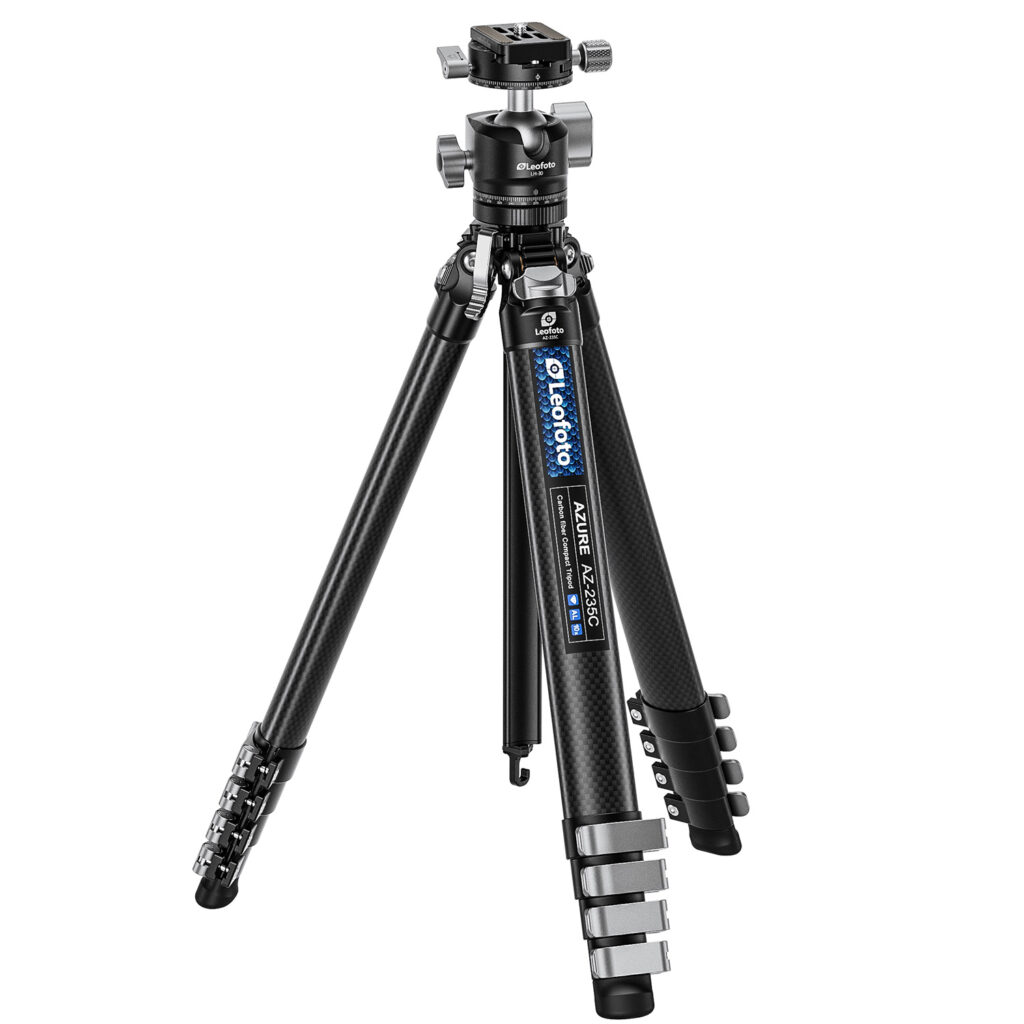
Evaluating whether an ultra compact travel tripod can unite transportable dimensions with rapid deployment requires examining structural mechanics. Traditional compact designs frequently sacrifice setup speed or stability to decrease closed length. Compromises between collapsed volume and readiness often hinder photographers navigating fast-moving assignments.
Identifying the best compact camera tripod involves assessing how specialized frame geometry reduces dead space. Transporting support hardware across varied assignments demands equipment that packs down tightly without requiring complicated assembly routines. Smooth field preparation prevents missed shots during critical transitions.
Spatial efficiency must function alongside mechanical dependability during active field use. Demanding photography disciplines including outdoor expeditions, interior documentation, studio sessions, and ground-level macro work require stable support platforms. Hardware capable of immediate deployment across varied scenarios provides genuine practical value.
Structural Geometry and Volume Reduction
Engineers at Leofoto resolved spatial packaging challenges by pairing a Y-shaped center column with oval leg tubes. Conventional circular tubes leave unoccupied space when folded against a central column. Contouring the central spine into a Y-profile allows oval leg segments to nestle directly into structural channels.
Collapsing an ultra compact travel tripod into this interlocking profile yields a system that fits comfortably in one hand. Reducing exterior dimensions enables photographers to navigate tight studios, staircases, and tabletops effortlessly. Replacing bulky tripods with contoured profiles simplifies equipment transport through restricted locations.
Packing volume diminishes substantially without requiring diminutive working measurements. Folding the carbon-fiber framework produces a compact transport length of 486 mm across five leg sections. Retaining this disciplined storage profile simplifies stowing the gear inside standard transport cases.
Dimensional stability remains robust despite the space-saving tube configuration. Carbon fiber construction incorporates a maximum leg diameter of 38.5 mm to maintain rigid support. Specifications confirm a 10kg load rating alongside a 20kg stated maximum payload, preserving stability during demanding assignments.
Lever Mechanics and Rapid Leg Extension
Selecting the best compact camera tripod requires examining how locking mechanisms perform under fast-paced working conditions. Repeatedly adjusting five-section legs can consume critical minutes when framing fleeting subjects. Streamlined adjustment interfaces accelerate physical deployment without compromising mechanical clamp pressure.
Operational efficiency improves markedly through a re-designed flip leg locking system. Positioning levers flush against the oval carbon-fiber tubes compresses the folded profile. Photographers manipulate the mechanical clamps quickly, establishing direct tension across extending segments.
Smooth lever action releases multi-stage leg extensions in fluid, coordinated motions. Users disengage the locks, pull legs outward, and secure each segment firmly without questioning whether friction collars are tightened. Rapid clamping facilitates immediate transitions from transit to shooting readiness.
Swift field deployment minimizes setup latency across changing locations. Extending the five leg sections from their 486 mm transport length to full elevation takes only moments. Responsive mechanical controls keep photographers focused on creative execution rather than wrestling with hardware.
Angular Articulation and Wind Stability
Standard market options typically provide only three preset leg spread positions consisting of low, middle, and high angles. Operating across exposed outdoor environments reveals how restricted leg angles compromise stability during strong gusts. Photographers require specialized intermediate stances to maintain balance.
To assist outdoor work, Leofoto introduced a dedicated 42° setting alongside three standard positions, delivering four selectable leg angles. Selecting this 42° leg configuration optimizes balance in windy outdoor conditions by lowering center-of-gravity elevation while expanding the overall ground footprint.
Broadening stance width independently supports uneven outdoor obstacles including steep slopes, rocky ground, or staircases. Mechanical angle stops lock into position firmly, preventing accidental leg shifting. Stable framing remains achievable across challenging contours without demanding supplemental ballast equipment.
Extending the support system fully yields a maximum height of 1612 mm with the center column raised. Photographers tailor working height while adjusting stance width to match environmental variables. Reliable elevation control supports diverse viewing perspectives across demanding outdoor locations.
Modular Column Mechanics for Low-Level Capture
Exploring macro perspectives reveals why versatility defines the best compact camera tripod. Azure series architecture incorporates a modular center column consisting of both a long section and a short section. Integrated two-piece construction enables rapid transitions to ground-level capture.
Disassembling the column occurs smoothly by turning the outer ring of the mounting plate counterclockwise. Detaching the longer column section allows the platform to achieve an ultra-low minimum height of 171 mm. Photographers capture low-angle landscapes or macro subjects without needing separate adapters.
Inverting the central assembly provides an alternative setup for macro framing and overhead documentation. Releasing the apex locking lever and turning the weight hook permits quick column removal and upside-down mounting. Users simply pull out the spring-loaded lever to adjust clamping position.
Ball Head Integration and Operational Verdict
Camera support depends directly on the integrated LH-30R low height profile ballhead, which delivers enhanced mechanical reliability. An ergonomic large main locking knob provides effortless handling during position adjustments. A precisely machined ball facilitates silky smooth motion across multiple framing axes.
Panoramic framing benefits from laser-engraved degree markings on the panning base, supporting calibrated tracking alongside an optional geared 360-degree configuration. The platform integrates Arca-Swiss style component compatibility for swift camera attachment, while a 1/4″ screw hole accommodates external accessories.
Specifications across the series show deliberate choices, pairing the five-section AZ-235C with the four-section AZ-204C. While the four-section model provides 1405 mm maximum height and 1.2kg weight, the five-section version delivers 1612 mm elevation at 1.5kg, balancing working reach against packed size.
Published specifications from Leofoto demonstrate that compact dimensions and rapid deployment can successfully coexist in one unit. Combining Y-column contouring, oval carbon-fiber legs, rapid flip locks, and four-angle versatility confirms that an ultra compact travel tripod can achieve operational speed and compactness.
