
Product development teams are under constant pressure to validate designs faster while controlling tooling costs and production risks. Traditional manufacturing can become inefficient when a project requires multiple design iterations or only a limited number of parts. Metal additive manufacturing offers another route by building components directly from digital models. For industrial buyers, an industrial metal 3D printer can connect prototyping, design validation, and small-batch production within a more flexible manufacturing workflow.
Why Metal Additive Manufacturing Fits Rapid Prototyping
Rapid prototyping is valuable when engineering teams need physical parts to evaluate form, fit, function, or manufacturability before committing to larger production investments. Conventional processes may require dedicated tooling or lengthy preparation, particularly for geometrically complex metal components.
Metal additive manufacturing builds parts layer by layer from digital data, reducing the need for conventional molds or dedicated tooling for many applications. LiMN 3D identifies rapid prototyping and customized production among its applications, particularly in consumer electronics, while also serving aerospace, automotive, mold manufacturing, energy, medical and dental, and research applications.
This approach allows development teams to make design changes digitally and produce another physical iteration without rebuilding conventional tooling. For businesses working on evolving products, that flexibility can make prototype evaluation more responsive and help shorten the path from concept to manufacturable component.
An Industrial Metal 3D Printer for Development and Small-Batch Needs
The value of an industrial metal 3D printer is not limited to prototype production. Low-volume manufacturing can also benefit when expected demand is too limited to justify conventional tooling costs or when customers require customized components.
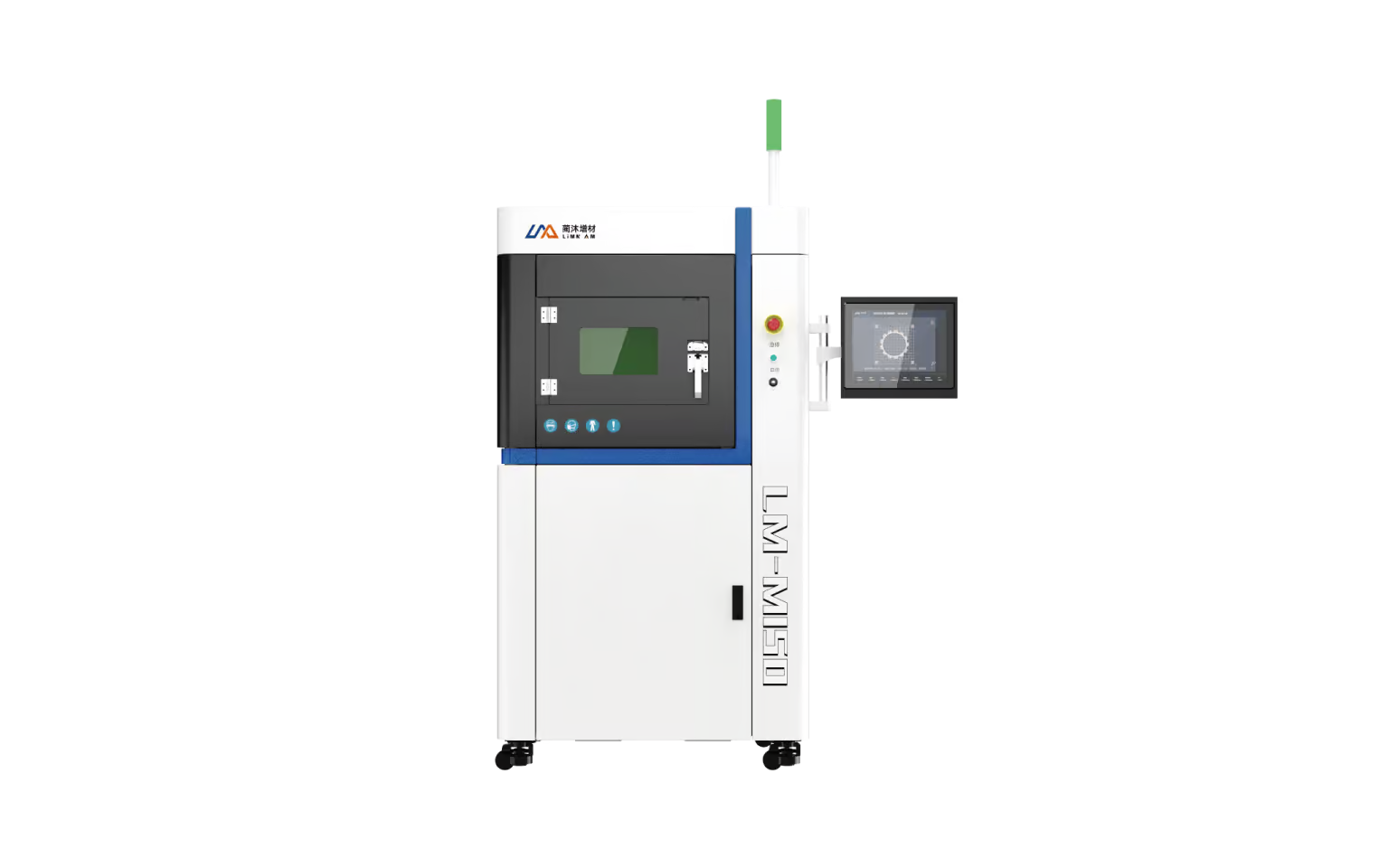
LiMN 3D’s LM-M150 is an SLM metal 3D printing system that uses metal powder bed melting technology. The company’s published specifications list dimensions of 960 × 760 × 1788 mm, a layer thickness range of 20–120 μm, and power consumption of 380 V, 34 kW.
For business manufacturers, this type of equipment can be relevant when production quantities are modest, product configurations vary, or a component needs to move from engineering validation toward limited commercial production. The same additive workflow can potentially support both stages, reducing the need to introduce an entirely different manufacturing route for every development phase.
Precision Features Support Repeatable Prototyping
Prototypes are useful only when they provide reliable information about the proposed design. Poor dimensional consistency or unstable processing can make it difficult for engineers to determine whether a problem comes from the design itself or the manufacturing process.
The LM-M150 is equipped with a servo-driven scanner and powder spreader designed for high accuracy. Its Z-axis uses a high-precision grating ruler with ±0.01 mm repeatability, while a proprietary correction algorithm is designed to improve printing accuracy.
The machine also incorporates an airflow system designed and verified for a uniform wind field, clean surfaces, and consistent spark performance. An independent circulation filtration system uses durable filter elements intended to reduce replacement frequency. These features address process stability as well as the physical production of individual parts.
Simplifying the Digital-to-Part Workflow
A rapid development process depends on more than machine hardware. Engineering teams also need a practical connection between digital files, machine control, and part production. Complicated workflows can reduce some of the time advantages associated with additive manufacturing.
The LM-M150 uses TH3D control software, which LiMN 3D describes as capable of completing the control process from data through part processing and forming. Operating instructions are designed to guide users through printing tasks.
For industrial users, integrated software control can help establish a clearer production workflow. Engineers can focus on preparing and evaluating designs while production personnel work through a defined machine operation process. This becomes increasingly relevant when additive equipment is used repeatedly for prototype iterations or low-volume orders rather than occasional experimental printing.
Where Low-Volume Production Can Create Value
Low-volume production often involves a difficult economic balance. Conventional manufacturing can provide efficient unit costs at scale, but tooling and setup expenses may be harder to justify when quantities are limited. Metal additive manufacturing can offer greater design flexibility without requiring the same type of upfront tooling investment.
LiMN 3D highlights applications such as aerospace components, automotive parts, heat exchangers, complex mold structures, and consumer electronics components. Its application examples include cooling lattices, heat sinks, impellers, aerospace bearings, automotive brakes, and other geometrically complex parts.
These applications illustrate where additive manufacturing can be considered for specialized or lower-volume components. It can also support customized production, where different customers or product versions require variations without making a new mold for every design.
Supporting the Transition from Prototype to Production
A major advantage of using industrial equipment for both development and limited production is workflow continuity. When a validated prototype can be produced using the same fundamental manufacturing technology intended for later parts, engineering teams can gain experience with the process before production demand increases.
LiMN 3D describes its offering as an end-to-end solution covering requirement analysis, technical support, and tailored process guidance. The company also states that its metal additive manufacturing equipment supports printing accuracy within 0.1 mm for complex metal parts.
Such support can be particularly important for companies new to metal additive manufacturing. Equipment selection, process parameters, part orientation, support strategies, and post-processing all influence the final result. A solution-oriented supplier can therefore contribute beyond the initial equipment purchase.
Building a More Flexible Manufacturing Strategy
The broader benefit of an industrial metal 3D printer is the ability to connect product development with flexible manufacturing. Instead of treating prototyping and production as completely separate activities, businesses can use metal additive manufacturing to create a more adaptable path between them.
For companies developing complex metal components, the LM-M150 combines metal powder bed melting, precision motion and scanning systems, filtration, and TH3D control software in one industrial platform. Its specifications and application positioning make it relevant to businesses evaluating additive manufacturing for prototype development and lower-volume production requirements.
From Faster Iterations to Smarter Production Decisions
Rapid prototyping and low-volume manufacturing require flexibility, precision, and sensible control of development costs. Metal additive manufacturing can provide these advantages by reducing dependence on conventional tooling for suitable applications and allowing digital designs to move more directly toward physical parts.
An industrial metal 3D printer such as the LiMN 3D LM-M150 can therefore serve as more than a prototyping machine. With its published 20–120 μm layer thickness range, ±0.01 mm Z-axis repeatability, powder bed melting technology, and integrated TH3D control software, it provides an industrial platform for businesses exploring a more responsive route from design iteration to specialized production.
