
One overnight trace can alternate between obstruction, unstable ventilatory control, mask leakage, and treatment-emergent central events as sleep stage and body position change. By maintaining continuous pressure, a cpap device can splint the airway, but a fixed setting may be insufficient when obstruction varies or when ventilation becomes unstable.
Automatic systems examine signals derived from flow, pressure, timing, and leakage to classify changes and adjust support within prescribed limits. The objective is to respond without chasing every irregular breath, since overly aggressive pressure shifts can disturb sleep or contribute to discomfort.
Clinicians still need a diagnostic foundation and a titration strategy that distinguishes persistent obstruction from central pauses, arousal-related instability, and mask artifacts. For many patients, a cpap device remains an important baseline option, yet complex cases may require bilevel modes, timed support, or a volume-oriented function depending on the dominant physiology.
Waveform analysis is therefore a decision aid within a controlled therapy system, not a substitute for clinical interpretation, follow-up, or model-specific evidence about the algorithm.
A careful intake also checks opioid or sedative exposure, heart failure, neuromuscular weakness, altitude, nasal obstruction, and prior treatment history, because these factors can alter event patterns and the safety of automatic pressure responses. Those factors should remain visible when automated reports are interpreted.
From Breath Signals to Controlled Adjustments
A system configured as bipap for osa measures the shape and timing of respiratory flow and relates those signals to delivered pressure. Flattening of inspiratory flow can suggest upper-airway limitation, while changes in respiratory rate, tidal pattern, leakage, or the interval between efforts may point to a different problem.
The controller can adjust baseline or inspiratory pressure gradually, observe the resulting waveform, and avoid exceeding prescribed boundaries. Trigger sensitivity determines how readily the machine recognizes an effort; cycling criteria influence when inspiration ends; rise time affects how quickly pressure reaches its target.
Poorly selected values can create discomfort or apparent asynchrony even when the algorithm is functioning as designed. A platform set up as bipap for obstructive sleep apnea (OSA) may also use recent therapy history to refine baseline behavior across nights rather than treating each breath in isolation.
Reliable analysis depends on a stable mask seal and clean signals, so mask-fit checks and leak compensation are fundamental parts of the control loop. Clinicians should review trends, not a single screenshot, and compare machine classifications with symptoms and formal sleep data.
Review software should preserve raw or high-resolution evidence around flagged events whenever possible, enabling specialists to examine the breath sequence and determine whether the classification reflects physiology, artifact, or an interface problem. Preserved context also improves teaching and review of unusual respiratory patterns.
Applying Adaptive Functions in the Home Setting
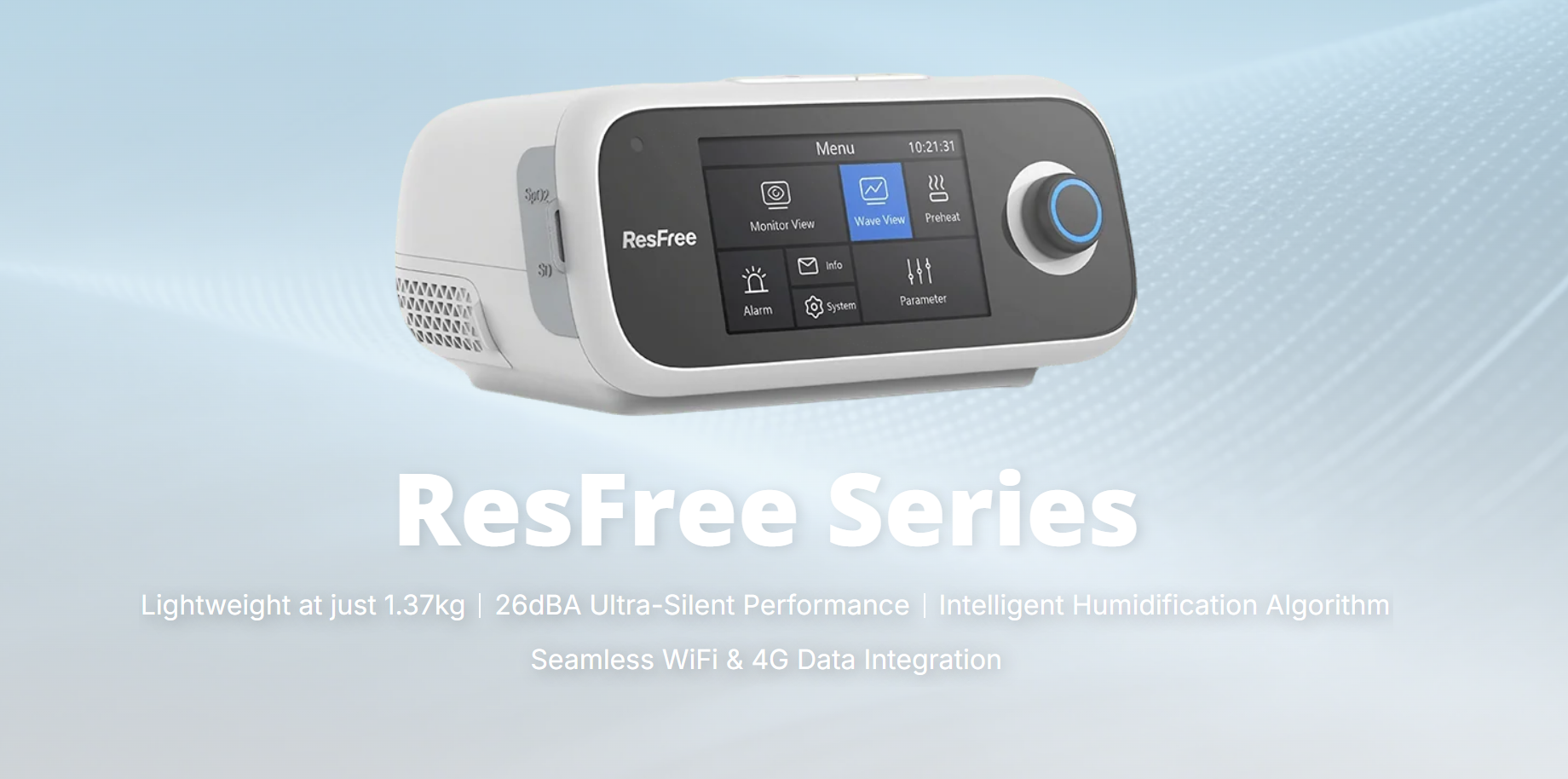
Within the ResFree family, Beyond separates sleep-focused auto-adjustment from bilevel support intended for respiratory insufficiency and complex sleep apnea. The iAPAP function adjusts baseline pressure using recent therapy records and breathing data, while Auto RAMP detects sleep onset so lower pressure can be maintained during wakefulness.
Model selection matters: Beyond assigns S, T, S/T, APCV, and Volume Assured Function (VAF) to different configurations, with VAF varying pressure toward a preset tidal-volume goal. Inspiratory and expiratory sensitivity, rise-time control, leakage compensation, and mask-fit feedback provide additional ways to improve the interaction between patient and machine.
Treatment information can be stored on an SD card or transferred through optional Wi-Fi or 4G connectivity, enabling compliance reports and trend charts for authorized review. Adaptive management benefits from these capabilities, but the exact signals, classification rules, and response timing differ by model and software version.
Documented functions should be described accurately without suggesting that an unspecified algorithm can diagnose every central event or automatically select the correct treatment for every complex presentation.
Model-specific brochures and operating guides should be checked before assigning features to a particular configuration, since portfolio names may cover several pressure ranges, displays, communication options, and therapy modes with different intended uses. Configuration control prevents a feature description from drifting across models.
Clinical Oversight Keeps Automation in Context
Successful treatment requires a feedback loop that includes the patient, the machine, and the care team. Initial settings should reflect the diagnostic study, comorbid cardiac or pulmonary disease, medication use, oxygen requirements, and the type of events observed during titration. Follow-up places residual apnea indices alongside leak and pressure distribution.
The review is completed by looking at use time and breathing patterns together with sleep quality, daytime alertness, and newly reported intolerance. Persistent central events, worsening oxygenation, rising carbon dioxide, chest symptoms, or marked sleep disruption warrant reassessment rather than repeated unsupervised setting changes.
Comfort interventions such as humidification, heated tubing, mask selection, and gradual acclimatization can improve adherence without altering the therapeutic objective. Data connectivity makes review faster, yet remote access needs consent, secure account management, and clear responsibility for acting on concerning trends.
Automation is most valuable when it makes measured adjustments inside a well-defined prescription and produces interpretable evidence for follow-up. In complex OSA, a practical goal is to make residual events and pressure adjustments easier to interpret by relating them to the waveform evidence that prompted each adjustment.
Patients benefit from knowing which changes the equipment may make automatically and which require professional approval; that distinction reduces anxiety, discourages menu experimentation, and creates more useful conversations when treatment reports show an unexpected pattern. Clear expectations make automation easier to trust without encouraging complacency.
