
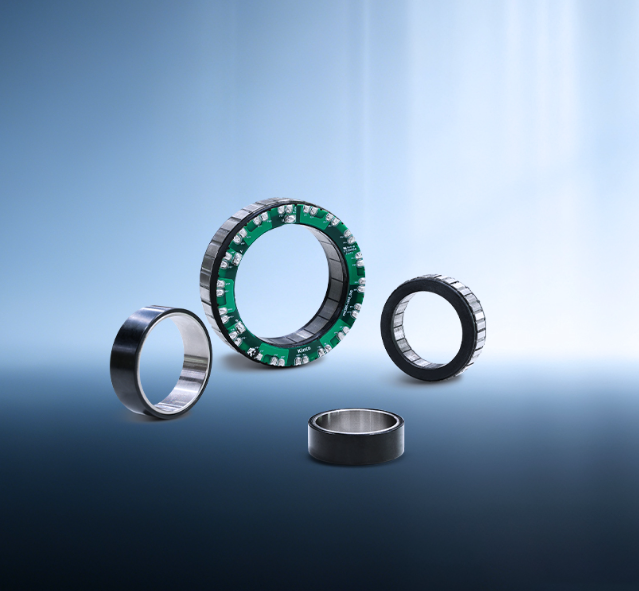
Selecting a frameless torque motor manufacturer is not the same as choosing a standard servo motor supplier. With a housed motor, the supplier delivers a complete, tested assembly — bearings, housing, shaft, and cooling all integrated and validated.
A frameless motor arrives as two separate components: a stator and a rotor. The buyer assumes responsibility for integration, thermal management, and mechanical alignment. This shifts the risk equation dramatically. The manufacturer’s role expands beyond delivering specified torque and speed to providing components that can be reliably embedded into another system without introducing hidden failure modes.
Why Frameless Motor Selection Is Different
The absence of a housing means the motor has no built-in protection against environmental contaminants, no integrated cooling path, and no pre-aligned bearings. Every aspect of its performance depends on how well the buyer integrates it. This makes manufacturer selection as much about process capability and application support as about published specifications.
A frameless torque motor consists only of a stator with copper windings and a rotor with permanent magnets. When integrated into a robotic joint, it typically works alongside a harmonic reducer, encoder, and driver to form a complete actuation module.
The motor’s torque density — the torque output per unit volume or weight — directly determines the joint’s load capacity within constrained space. But torque density alone tells little about whether the motor will perform consistently across thousands of production units.
Matching Motor Specifications to Application Reality
The selection process begins with defining the operating conditions: load inertia, motion profile (speed and acceleration curves), duty cycle, available installation space, supply voltage, ambient temperature, and required ingress protection. These parameters drive the core technical decisions.
Torque requirements come first. The general rule of thumb is straightforward: torque first, speed second. The motor must deliver sufficient continuous torque for steady-state operation and adequate peak torque for the most demanding cycle.
Engineers typically apply an appropriate torque margin above the calculated steady-state requirement, depending on the duty cycle and application. Robotic joints can experience peak torque demands several times higher than continuous operating torque, depending on acceleration, payload, and duty cycle.
Torque ripple deserves close attention. This parameter measures how smoothly the motor rotates at low speeds. High torque ripple produces cogging — a jerking sensation that degrades precision in applications like assembly or medical robotics.
Tight stator-rotor alignment is important because excessive eccentricity can increase torque ripple and place additional thermal and mechanical stress on the assembly. Advanced designs often address this through multi-pole magnet ring magnetization and segmented skew pole geometries.
The motor constant, Km, provides a truer measure of continuous torque capability under thermal constraints than published torque figures alone, by relating torque to resistive losses for fair thermal comparisons—and a manufacturer that provides it demonstrates engineering rigor.
Thermal performance cannot be overlooked. Heat generation directly limits continuous operation and service life. Advanced potting processes and cooling structures have become key differentiators. Epoxy potting not only protects windings but also conducts heat away from the copper, enabling higher continuous output in compact packages.
What Manufacturing Capability Actually Means for Frameless Motors
Technical specifications on a datasheet represent what the motor should do. Manufacturing capability determines what it actually does across thousands of units. The same design produced by different manufacturers can yield dramatically different performance consistency.
Three processes define frameless motor quality: stator winding, magnet bonding, and potting encapsulation. Winding precision affects magnetic field uniformity. Magnet placement deviation exceeding 0.1mm produces noticeable torque ripple at low speeds. Potting quality determines thermal performance and environmental protection.
A manufacturer that controls these processes internally rather than outsourcing them has greater ability to maintain consistency and respond to quality issues. Automated manufacturing and inspection processes can improve dimensional consistency and repeatability, particularly at higher production volumes.
Beyond the Datasheet: Supply Chain and Customization
Application requirements rarely align perfectly with standard catalog offerings. A manufacturer’s willingness and ability to customize matters. Some suppliers offer standard frame sizes only; others support full-process customization to match specific mechanical interfaces, winding configurations, or feedback requirements.
Scale and lead time are practical considerations that engineers sometimes overlook during selection. A manufacturer with proven mass-production capability reduces the risk of delivery delays as projects move from prototype to production. The track record of batch-to-batch consistency separates suppliers that can support volume manufacturing from those suited only to low-volume custom work.
Integration support also differentiates manufacturers. Frameless motors must be paired with appropriate drivers, encoders, and sometimes reducers. A supplier that offers complementary components — hollow drivers, for example, that share the same mechanical envelope as the motor — simplifies system design and reduces the number of vendors the buyer must manage.
Check whether the specific motor model carries the certifications required for the target market and application. CE and UL markings indicate compliance with safety standards recognized in major markets, but the specific scope of certification varies by product type and intended use. Verifying this ensures the motor meets regulatory requirements without last-minute surprises.
What separates a reliable frameless motor manufacturer like Kinco from an unreliable one is not any single factor but the combination of technical capability, process control, and application support. The selection process cannot stop at the datasheet. It must extend into the factory floor, the quality system, and the application engineering team.
