
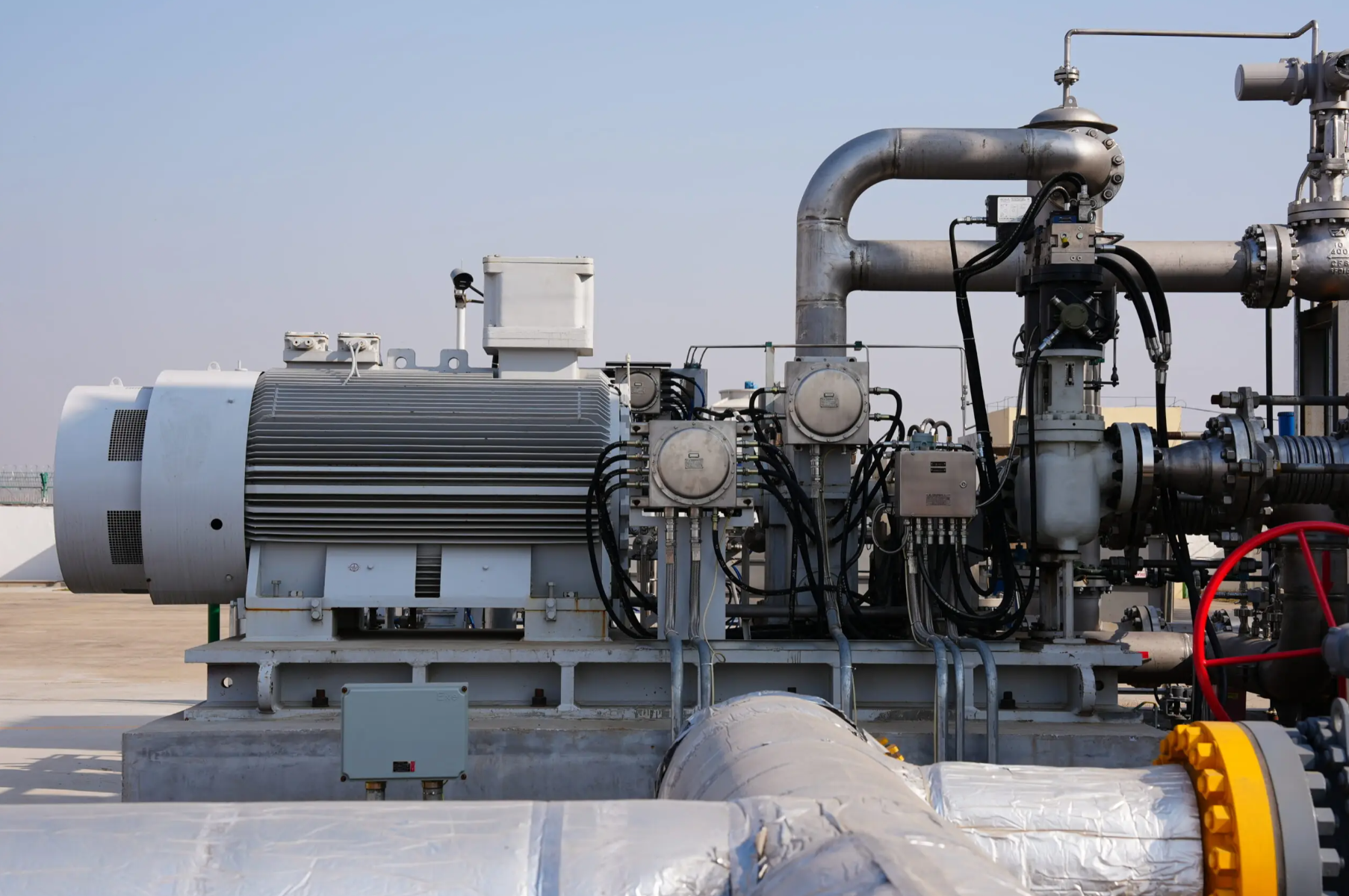
Natural gas transmission requires immense pressure to move vast volumes of fuel across continents efficiently. When this gas reaches industrial facilities or local distribution networks, its pressure must be substantially reduced for safe consumption. Standard practice utilizes pressure regulating valves to throttle the flow. While effective for controlling pressure, this traditional method ignores a significant thermodynamic byproduct of the process: a drastic and immediate drop in the gas temperature as it crosses the valve boundary.
Natural gas may cool during pressure reduction because of the Joule–Thomson effect. In a turbo expander, the gas also produces shaft work, which typically leads to a greater temperature drop under comparable conditions. In conventional systems, this severe cooling effect is often viewed merely as an operational hazard that requires costly pre-heating to prevent pipe damage. However, forward-thinking facilities are now capturing this thermal byproduct, transforming a potential problem into a highly valuable source of zero-carbon industrial cooling that can be monetized.
The Physics of Temperature Drop During Gas Expansion
When gas expands through a turbine, it performs work by spinning a rotor. Under comparable inlet and outlet conditions, turbine expansion can produce a greater temperature drop than throttling. The actual temperature drop depends on the gas properties, operating conditions, and expander efficiency.
To maximize the cooling potential, facilities must replace standard valves with rotating expansion machinery. When gas expands through a turbine, it performs physical work by spinning a rotor. The expansion can be evaluated against an ideal isentropic process, while actual performance depends on the expander’s efficiency and operating conditions. This difference is what makes turbines so effective for cooling.
The Mechanics of Cooling Generation
This dynamic temperature reduction forms the core of modern turbo expander refrigeration. By actively extracting mechanical work from the continuous gas stream, the turbine forces the gas to exit at severely depressed temperatures, often falling well below zero degrees Celsius. This process creates a massive, reliable stream of deep-cold thermal energy right at the pressure reduction site, ready for secondary extraction.
Instead of simply reheating this freezing gas with industrial gas boilers before it enters the local distribution network, engineers can route it through advanced heat exchangers. These exchangers safely transfer the extreme cold from the natural gas stream into a secondary closed-loop cooling fluid, such as glycol or chilled water, without ever mixing the actual combustible fluids together.
Potential Applications for Captured Cold Energy
Once the extreme cold is safely transferred to a secondary liquid coolant, it becomes a versatile utility. One of the most practical applications is supporting large-scale commercial cold storage warehouses. Facilities located near pressure reduction hubs can utilize this thermal transfer to maintain freezing temperatures for perishable food goods, drastically reducing their reliance on expensive, electrically driven mechanical chillers. This lowers operational costs and reduces the facility’s overall carbon footprint.
Another highly relevant application involves modern industrial data centers. These computing facilities generate immense amounts of ambient heat and require continuous cooling loads to keep servers operational. Utilizing natural gas refrigeration can offset a massive portion of a data center’s daily HVAC electrical demand, creating a highly synergistic and sustainable relationship between the energy sector and the technology industry.
Evaluating Local Demand and Facility Proximity
Despite the clear operational benefits, integrating this cooling technology relies heavily on local thermal demand. Cold energy is notoriously difficult and expensive to transport over long distances. Even heavily insulated piping systems will gradually absorb ambient heat, diminishing the cooling capacity as the fluid travels. Therefore, the end-user of the cold energy must be geographically adjacent to the station.
If a facility experiences a massive pressure drop but lacks a nearby industrial neighbor with significant cooling needs, capturing the cold energy may not be economically viable. Operators must conduct thorough regional surveys to identify potential commercial off-takers before committing to the complex heat exchanger infrastructure required to harness and distribute this unique thermodynamic potential.
System Design and Integration Challenges
Designing a system to capture cold energy introduces unique mechanical engineering challenges. The most critical issue is preventing hydrate formation and freezing within the natural gas pipeline itself. While the overarching goal is to harvest cold energy, the gas must still exit the facility above a certain minimum temperature limit to protect downstream carbon steel piping from catastrophic brittle fracture.
To balance these opposing needs, engineers must carefully calibrate the heat exchangers. The secondary cooling fluid must extract enough thermal energy to be useful for the industrial end-user, while simultaneously ensuring the primary natural gas stream receives enough ambient warmth to remain safely above its critical dew point and specific hydrate formation thresholds.
Any latent moisture present in the incoming gas stream will instantly freeze upon expansion, creating solid ice projectiles that can severely damage the high-speed turbine blades.
Capturing Cold Energy Where Expansion Happens
Cold-energy recovery only works when turbine expansion, hydrate control, and a nearby cooling load come together at the same site. Rather than treating the temperature drop as a problem to be reheated away, operators can turn it into usable refrigeration for cold storage, data centers, or industrial process cooling. Joulong Energy Technology Co., Ltd. develops turbine expanders and natural gas pressure differential power generation systems with in-house R&D, recovering pressure energy to deliver zero-carbon power and cold energy without additional fuel consumption. Contact Joulong to evaluate whether your pressure-reduction site has a viable cold-energy off-take.
