
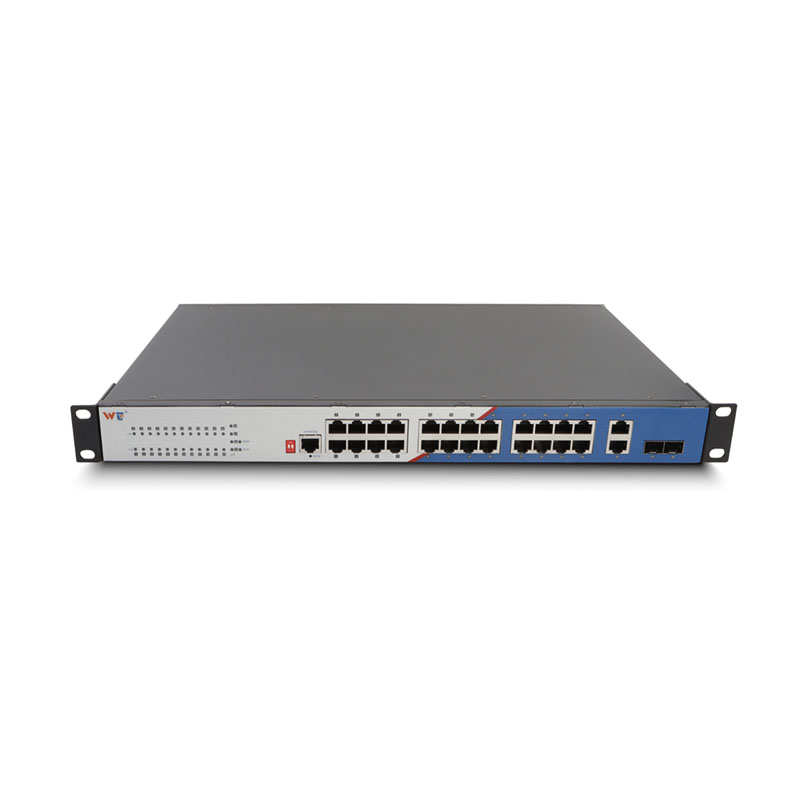
Modern enterprise networks depend on precise frame forwarding mechanisms to transport data across local area segments. Operating within Layer 2 of the Open Systems Interconnection model, an L2 managed switch inspects incoming Ethernet frame headers to read source and destination Media Access Control addresses. Hardware maintains an internal address table that maps individual MAC addresses to physical device ports, allowing incoming traffic to reach specified destinations without flooding unconcerned ports.
Administrative management capabilities differentiate managed switching hardware from basic unmanaged devices. Network administrators access configuration interfaces via Command Line Interface or web interfaces to adjust port settings, configure VLANs, and monitor real-time traffic statistics. Utilizing VLAN segmentation allows IT teams to isolate broadcast domains logically across shared physical cabling, improving bandwidth utilization and preventing unnecessary broadcast storms.
Network Layer Routing Capabilities and Traffic Isolation
Moving beyond local MAC-based switching, Layer 3 switches integrate basic IP routing functions into high-speed hardware silicon. Standard Data Link switches transfer frames strictly within identical IP subnets, requiring an external router to pass traffic between distinct subnets. Layer 3 switching hardware inspects IP packet headers alongside MAC addresses, executing static or dynamic routing protocols directly at port speed.
Inter-VLAN routing inside network switches accelerates communication between internal subnets by bypassing external gateway routers. Wire-speed packet forwarding reduces hardware bottlenecks in data centers where traffic between subnets occurs continuously. While standard routers perform advanced packet inspection and complex wide area network functions, Layer 3 switches optimize local sub-network routing within enterprise backbones.
Traffic Control Features and Redundancy Protocols
Network reliability requires robust redundancy protocols that prevent operational disruption during hardware or cabling failures. Standard data link environments implement Spanning Tree Protocol variants to detect physical cable loops and block redundant paths until primary links fail. Advanced redundancy frameworks, such as Rapid Spanning Tree Protocol or Ethernet Ring Protection Switching, restore network paths in milliseconds during physical link disconnections.
Traffic prioritization mechanisms further maintain performance quality for critical operational applications. Quality of Service features classify data packets based on priority tags, reserving bandwidth for time-sensitive traffic like voice streaming and video feeds. Configuring priority queues prevents heavy bulk data transfers from degrading latency-sensitive industrial control channels.
Network Security Implementation at Layer 2 and Layer 3
Protecting internal network infrastructure requires multi-layered security protocols applied directly at physical access ports. Port security controls limit access by restricting authorized MAC addresses on individual switch connections, preventing unauthorized hardware from connecting. Implementing IEEE 802.1X authentication verifies user identities before granting network access to local switch ports.
Layer 3 switches enhance protection by applying Access Control Lists that filter IP packets based on source address, destination address, and port numbers. While data link hardware isolates traffic within separate VLANs, network layer filtering enforces access policies across different corporate departments. Combining port-level MAC authentication with IP-based access policies establishes multi-layered perimeter defenses for local networks.
Performance Impact and Latency Characteristics
Hardware design directly affects packet processing speeds and overall transmission latency across enterprise switching environments. Application-Specific Integrated Circuits in specialized switching hardware process Ethernet frames in hardware silicon, achieving high throughput with minimal delay. Passing frames within identical Layer 2 subnets typically generates lower latency than executing Layer 3 routing lookups across complex subnets.
Energy efficiency and thermal management represent additional operational considerations for continuous industrial deployments. Dense switch installations generate heat that requires effective thermal dissipation designs within metallic enclosures. Efficient circuit layout reduces thermal output while sustaining continuous wire-speed switching under heavy processing loads.
Deployment Contexts and Architecture Planning
Selecting appropriate switching hardware requires evaluating network topology, sub-network structure, and scalability requirements. Deploying a versatile L2 managed switch fits edge locations where traffic remains within local subnets or passes upward to central aggregation routers. Access layer switches gather connections from IP cameras, wireless access points, and workstation endpoints before sending aggregated data into core backbones.
Enterprise networks frequently pair edge access switches with high-capacity Layer 3 switches at core aggregation layers. Deploying WINTOP 4 to 26-port Layer 2 managed switch hardware options at access points provides reliable port density and VLAN control while keeping configuration management straightforward. This tiered structure maintains localized traffic isolation while centralizing complex IP routing logic at central distribution nodes.
Conclusion
Understanding functional differences between Data Link frame forwarding and Network Layer IP routing helps network architects design stable, cost-effective infrastructure. Aligning switch hardware choices with specific subnet structures and security requirements maintains long-term network efficiency and operational stability.
Shenzhen Wintop Optical Technology Co., Ltd., founded in 2004, brings 21 years of optical communication experience as a national high-tech enterprise. Supported by 60 core patents and an international distribution network, WINTOP manufactures industrial switches, PoE devices, and L2 managed switch solutions for partners in over 40 countries. Contact technical teams today to discover tailored networking hardware options for upcoming enterprise projects.
