
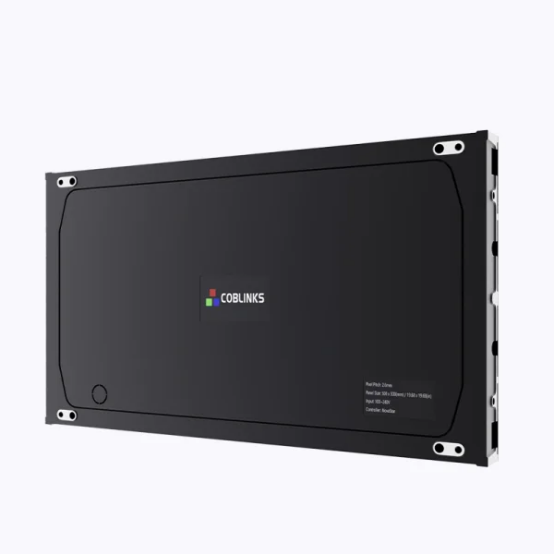
LED displays are widely used in advertising, conference rooms, transportation hubs, retail spaces, control centers, sports venues, and entertainment events. As display technology evolves, buyers are paying closer attention to both image quality and product engineering.
Understanding the LED Display Panels Structure and working principles helps distributors, contractors, and end users make better purchasing decisions. It also provides a clearer view of an led screen’s reliability, maintenance needs, and long-term value.
The Main Components Inside an LED Display
A professional led screen is made up of multiple interconnected components that work together to display images, videos, and real-time information.
At the most basic level, an LED display consists of LED modules, cabinets, power supplies, receiving cards, signal transmission systems, and control software. Each component performs a specific role within the overall display system.
LED modules contain thousands of LED chips arranged in a matrix. These modules are installed within cabinets that provide structural support and protection. The receiving card processes incoming video signals and controls how content is displayed on the screen. Meanwhile, power supplies deliver stable electrical power to ensure consistent operation.
The design of the LED Display Panels Structure directly influences display performance, maintenance efficiency, and installation flexibility.
How LED Pixels Create Images
The working principle of an LED display is based on individual light-emitting diodes. Each pixel typically consists of red, green, and blue LEDs. By adjusting the brightness of these three colors, the display can reproduce millions of color combinations.
When a video signal enters the system, the control processor converts image information into digital commands. These commands are then transmitted to receiving cards, which regulate the brightness and color output of individual pixels.
As the LEDs illuminate in different combinations, images and videos become visible on the display surface. Because the process occurs extremely quickly, viewers perceive smooth motion and continuous visual content.
This technology allows an led screen to deliver high brightness, excellent color performance, and wide viewing angles across various application environments.
Why Cabinet Design Matters
One often overlooked aspect of the LED Display Panels Structure is the cabinet itself. While LED modules generate the image, the cabinet determines structural stability, installation efficiency, and long-term durability.
For rental applications, cabinet weight plays a significant role in transportation and labor costs. Lightweight cabinets can reduce handling difficulties and improve deployment efficiency.
The CL Carbon Fiber Series developed by Coblinks demonstrates how cabinet engineering can improve operational performance. According to company data, the series reduces overall weight by approximately 30%, which can lower ocean shipping costs by up to 40% and reduce installation labor costs by around 30%.
In addition, the welding strength of the carbon fiber structure is reported to be three to five times higher than that of conventional cabinets, helping improve durability during repeated transportation and installation cycles.
Modular Design Improves Serviceability
Modern display systems increasingly rely on modular architectures. This approach allows individual components to be serviced or replaced without affecting the entire display.
Within the LED Display Panels Structure, modules, cabinets, and power systems can often be separated and maintained independently. This improves service efficiency while reducing operational downtime.
The MB Modular Series from Coblinks incorporates a front-maintenance design that improves maintenance efficiency by approximately 70%. Technicians can quickly access components from the front side of the display, simplifying servicing in environments with limited rear access.
The modular design also supports separate storage of modules, cabinets, and power boxes. According to company data, this inventory strategy can release approximately 30% to 40% of operating cash flow by improving stock management flexibility.
For rental companies and distributors, efficient maintenance and inventory control can contribute to stronger long-term business performance.
Creative Structures Expand Application Possibilities
The development of advanced display technology has expanded the possibilities of modern LED Display Panels Structure designs.
Traditional flat displays remain widely used, but many projects now require more creative visual solutions. Exhibition halls, commercial spaces, museums, entertainment venues, and brand activation events increasingly utilize curved or customized displays to create unique experiences.
The MC Creative Series from Coblinks supports rotatable splicing from 0° to 90°, enabling the construction of both concave and convex display surfaces. This design allows a single display system to support multiple configurations and application scenarios.
As audience expectations continue to evolve, creative display capabilities have become an important consideration for many project planners.
Manufacturing Quality Influences System Reliability
The reliability of an led screen depends not only on design but also on manufacturing quality. Precision assembly, quality control procedures, and component testing all influence long-term performance.
Coblinks operates a self-owned manufacturing facility covering 5,000 square meters and maintains a monthly production capacity of 10,000 square meters. By managing production internally, the company maintains quality consistency throughout the manufacturing process.
The company is certified as a National High-tech Enterprise, a Specialized, Refined, Unique & Innovative Enterprise, and ISO9001 certified. With more than 50 patents and exports to over 25 countries, Coblinks supports a wide range of commercial, rental, and fixed-installation projects worldwide.
Service stations in Europe, the United States, and Japan further help international customers access technical support and after-sales assistance when required.
Looking Beyond the Display Surface
Understanding the LED Display Panels Structure helps buyers evaluate more than just screen resolution and brightness. Cabinet engineering, modular architecture, maintenance accessibility, and manufacturing quality all contribute to the performance of a professional display solution.
As display applications become more diverse, organizations increasingly seek systems that combine reliability, efficiency, and flexibility. Through innovations in lightweight structures, modular maintenance, and creative display design, Coblinks continues to support customers looking for dependable led screen solutions across a wide range of industries.
