
Ammonia refrigeration is widely used in food and beverage facilities, including meat processing plants, dairy facilities, breweries, beverage factories, frozen-food operations, and cold storage warehouses. Its efficiency makes it suitable for large refrigeration systems, but an uncontrolled release can expose workers to serious health and safety hazards.
Effective ammonia management requires more than maintaining refrigeration equipment. Facilities should combine preventive maintenance, operating procedures, worker training, emergency planning, ventilation, and atmospheric monitoring. A suitable Gas Detector can provide workers with timely information when ammonia concentrations change during routine operations or maintenance.
Why Ammonia Detection Matters
Ammonia is a colorless gas with a strong, pungent odor. The U.S. Environmental Protection Agency identifies anhydrous ammonia as a hazardous substance used in refrigeration and notes that releases can create risks for workers, emergency responders, and surrounding areas.
Ammonia can irritate the eyes, skin, and respiratory system, while high concentrations can cause severe injury. It is also flammable within certain concentration ranges in air. These characteristics make early recognition of a release an important part of facility safety planning.
Odor alone should not be treated as a reliable safety measurement. Concentrations can change quickly near a leak, while ventilation and building conditions influence how ammonia disperses. Instrument-based monitoring provides measurable information that can support safer decisions.
Where Should Ammonia Monitoring Be Used?
Food and beverage facilities should identify locations where ammonia is stored, circulated, or potentially released. Refrigeration machinery rooms, valve stations, compressors, pressure vessels, piping connections, and equipment service areas may all require attention during a site-specific risk assessment.
Maintenance activities deserve particular consideration. Opening equipment, servicing valves, repairing connections, or working near refrigeration components can change exposure conditions. Employees performing these tasks may benefit from portable monitoring that moves with them.
How to Choose a Gas Detector for Ammonia
Selecting a Gas Detector should begin with the intended application. The equipment needs to support ammonia detection and provide specifications suitable for the expected concentration range, operating temperature, humidity, sampling method, and working environment.
Alarm functions should also be considered. Audible, visual, and vibration alarms can provide different forms of notification when an abnormal concentration is detected. Multiple alarm methods can be useful in busy processing environments where machinery noise or protective clothing may make one notification method less noticeable.
Before selecting equipment, purchasing teams should clarify whether monitoring is intended for routine worker checks, maintenance tasks, leak investigation, or broader site coverage. They should also review certification needs, sensor compatibility, alarm requirements, and environmental conditions so the selected instrument fits the actual operating scenario. This preparation can also make supplier communication more efficient and reduce the risk of choosing equipment that does not match site conditions.
Portable Ammonia Detection for Industrial Applications
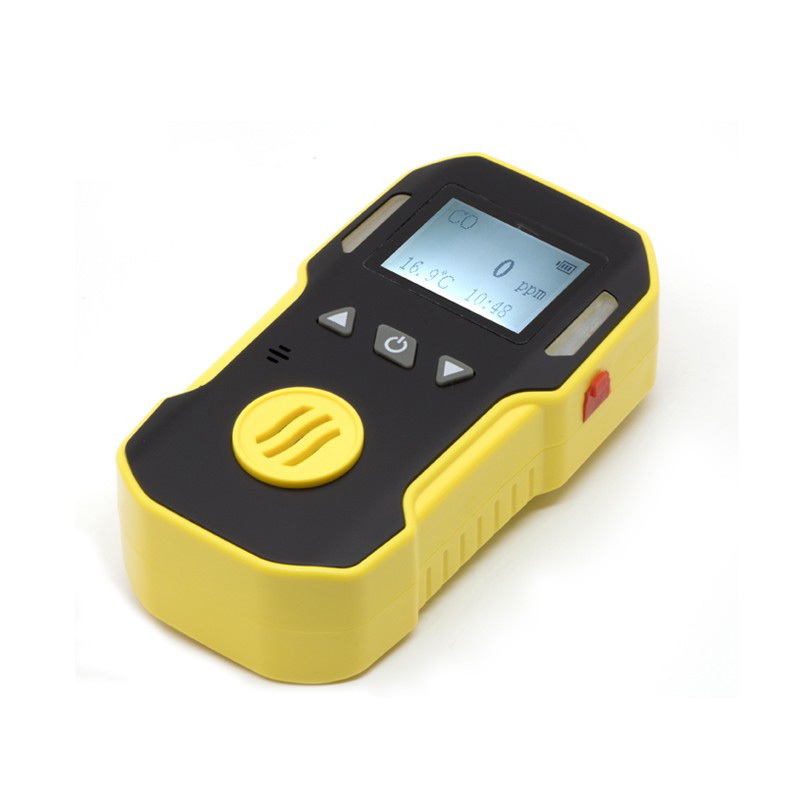
The company’s portable gas detector range includes instruments for different industrial gas detection requirements. The BH-90A portable single-gas detector can be configured for ammonia and other toxic gases when specified by the customer in advance.
According to the product specifications, the BH-90A uses natural-diffusion sampling and an embedded MCU controller. Its stated accuracy is no more than ±5% F.S., with a response time of less than 30 seconds. The instrument provides an LCD display together with LED, audible, and vibration alarms.
For toxic-gas applications, the BH-90A is specified for an operating temperature of -20°C to 50°C and humidity below 95% RH without condensation. It provides at least eight hours of continuous working time and has a stated sensor life of two years.
For facilities requiring multi-gas monitoring, the K-600 5-in-1 multi-gas detector can also be configured for ammonia and other toxic gases. The portable product range lists the K-600 among its multi-gas detection options, allowing buyers to select equipment according to their monitoring requirements.
Combine Detection With Process Controls
Gas detection should complement other safety measures rather than replace them. Facilities should maintain refrigeration equipment, inspect components, establish operating procedures, train employees, and prepare emergency response plans for potential ammonia releases.
The EPA provides ammonia refrigeration guidance covering food processors, food distributors, and refrigerated warehouses. Its guidance emphasizes understanding potential release scenarios and implementing measures that reduce the likelihood and consequences of accidental releases.
Detector maintenance should form part of the monitoring program. Organizations should follow the manufacturer’s instructions for calibration, inspection, charging, and sensor replacement. Workers should also understand alarm indications and know the appropriate response before an incident occurs.
Flexible Detection for Different Business Needs
Food and beverage facilities have different refrigeration systems, layouts, operating conditions, and procurement requirements. Flexible product configuration and responsive technical support can therefore be valuable when selecting gas detection equipment for a specific application.
Bosean provides integrated intelligent sensing products across gas detection, environmental monitoring, radiation detection, professional measurement, and thermal imaging. Its B2B cooperation models support OEMs, ODMs, OBMs, distributors, system integrators, and project-based customers, with an emphasis on customization and responsive service.
About Bosean
Founded in 2013, Bosean focuses on intelligent sensing products and solutions for industrial safety, environmental monitoring, outdoor measurement, and specialized professional applications. Guided by “bringing precision to safety and accuracy to performance,” the company emphasizes reliable quality, flexible customization, efficient delivery, and regulatory compliance.
For food and beverage companies reviewing ammonia monitoring options, Contact Us to discuss the working environment, detection requirements, and suitable Gas Detector configuration. “Contact Us” before ordering to confirm the required gas, range, and application conditions.
