
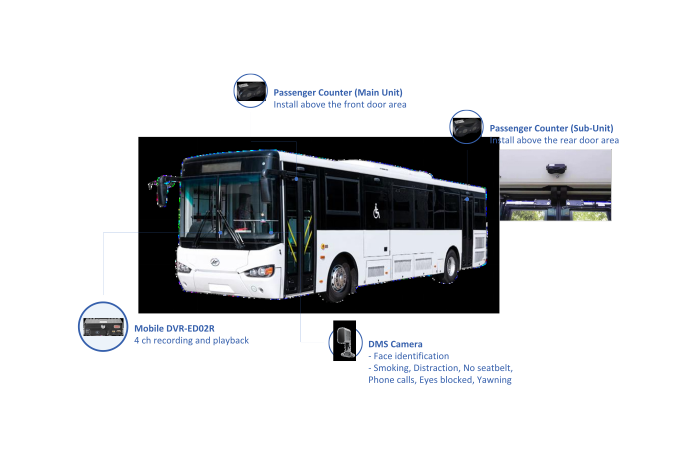
Public transport operators need more than a location dot on a map. Daily bus operations involve dispatching, route adherence, driver behavior, passenger safety, and control-center communication. A standalone tracker can answer where a bus is, but public bus operations usually require broader visibility. The right choice depends on whether the operator needs simple positioning or a connected system that supports daily fleet decisions.
What Standalone GPS Tracking Can Handle
Standalone tracking devices are useful when an operator mainly wants vehicle position, route history, speed, and basic movement status. They are simple to deploy and can support small fleets without complex dispatch workflows.
A basic bus GPS tracking system can help managers confirm whether vehicles are following planned routes. It may also provide geofence alerts, travel records, and speeding notifications. These functions suit basic monitoring rather than full operational control.
However, location data alone does not explain why a bus is delayed, whether the driver has behaved unsafely, or whether an incident occurred inside or around the vehicle. That is where a broader bus management platform becomes more useful.
How a Bus Management System Expands Visibility
A bus management system connects several data sources into one operational environment. Vehicle location can be combined with video, driver status, route information, alarms, and device health. This gives dispatchers more context when reviewing a delay, deviation, or safety event.
For public transport management, this broader view can support route supervision and faster incident assessment. Instead of checking separate systems, managers can review location data together with event records and video evidence. This is useful for urban bus, school bus, and regional transport fleets.
System integration also matters. Operators often use existing software for dispatch, maintenance, or reporting. A scalable platform should exchange data with these tools instead of forcing the operator to replace every existing system.
Video Telematics Adds Operational Context
GPS shows movement, but video telematics can explain what happened before and during an event. AI-enabled cameras may identify risky driving behavior, distraction, fatigue, lane events, or other predefined conditions.
For a public bus operator, video can support incident review and driver coaching. When a harsh braking event appears in the fleet platform, a manager can review the related recording instead of judging the event from sensor data alone.
A bus GPS tracking system combined with video telematics can provide a more complete record of fleet activity. It can support safety programs, claims review, and investigations while keeping location and event data connected.
Integration and Hardware Matter in Large Fleets
Large fleets need hardware that can operate under vibration, temperature changes, frequent daily use, and long vehicle service cycles. Installation, communication interfaces, storage, and remote maintenance also affect operating cost.
This is where suppliers such as BSJ Technology fit into the technology chain. They provide AI video telematics hardware, Fleet IoT devices, GPS tracking products, and related fleet solutions for B2B customers. Their open ecosystem can support integration with third-party software platforms such as Wialon and GpsGate, which is useful for distributors and system integrators.
Their Public Bus solution focuses on real-time vehicle monitoring, system integration, adaptable hardware, data security, and technical support. These capabilities matter when an operator needs connected hardware rather than a single tracker.
Which Option Fits Different Operating Needs
For a small fleet with simple oversight requirements, standalone tracking may be sufficient. This suits fleets needing route history, geofencing, or speed monitoring.
For larger networks, public transport management often requires more. Dispatchers may need route status, event alerts, driver-related information, video records, and integration with existing control platforms. These functions help teams respond to daily operational problems with more context.
A modular approach can also work well. Operators can begin with tracking and then add video, sensors, or other IoT devices as requirements grow. This avoids adding complexity before the operational need is clear.
Key Questions Before Selection
The first question is what decisions the system needs to support. If managers only need to locate buses, a simple tracker may be enough. If they need to investigate incidents, monitor driver risk, supervise routes, and share data across departments, a broader platform is more suitable.
Procurement teams should also review hardware compatibility, API availability, platform integration, data access, technical support, and future expansion. For distributors and integrators, OEM and ODM flexibility may affect project feasibility.
A bus GPS tracking system should not be judged only by location accuracy. Buyers should consider how the device connects with cameras, software, sensors, and reporting tools because these connections shape how useful the collected data becomes.
A More Practical Basis for Choosing
The difference between standalone GPS tracking and a bus management system is mainly the depth of operational control. One focuses on position and movement. The other can connect location with video, driver events, alerts, and fleet workflows.
For fleets planning broader bus operations, the practical question is whether the system can support current needs and future integration. BSJ Technology is one example of a hardware-oriented supplier offering AI video telematics and adaptable IoT products for this type of deployment.
A well-matched system should reflect fleet size, operating risks, existing software, and the level of data coordination required. In that sense, public transport management is not just about tracking vehicles. It is about giving operators enough context to manage routes, safety events, driver performance, and daily service with clearer information.
