
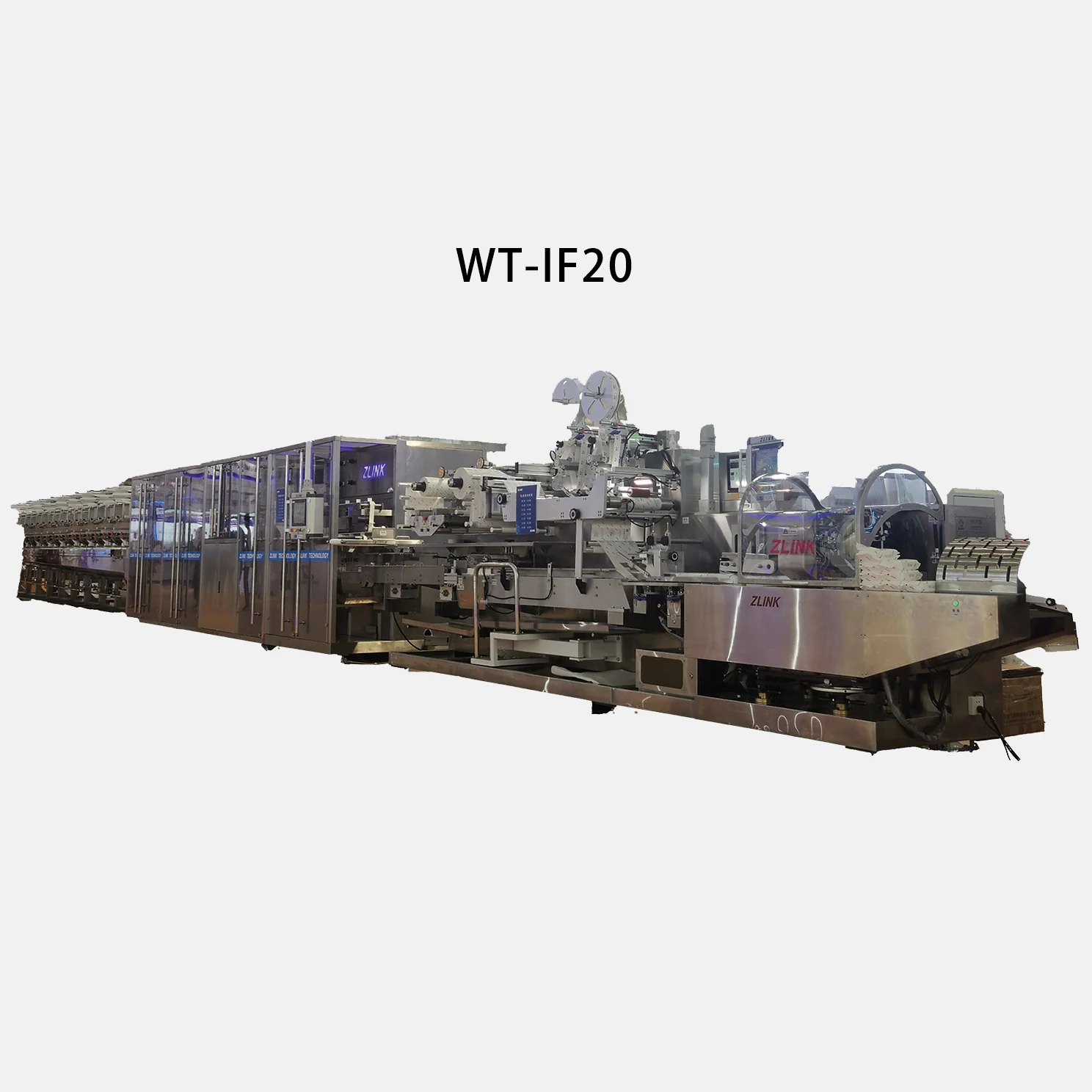
High volume personal care manufacturing facilities require synchronized mechanical architectures to process heavy substrate rolls into fully finished wet wipes packages continuously. Plant engineers and procurement officers evaluating equipment options prioritize system stability, cross fold accuracy, and solution dosing repeatability to maintain consistent operational efficiency. Establishing a continuous production process from raw nonwoven feeding to primary packaging minimizes manual intervention while preserving product cleanliness. As a recognized wet wipes production line supplier ZLINK configures high speed manufacturing systems engineered to support stringent hygienic standards across dynamic operating environments.
Automated Nonwoven Web Feeding and Unwinding Assemblies
The initial stage of processing on a modern baby wipes production line begins at the continuous nonwoven unwinding station, where heavy jumbo rolls are mounted onto dual axis unwinding shafts. Tension sensor rollers monitor web movement continuously, preventing material sag or excessive web stretching as raw nonwoven sheets travel toward the slitting assembly.
Unwinding reviews may include roll diameter, core type, splice tape, web width, and operator access. ZLINK WT-IF series configurations can be discussed with tension rollers, edge guiding, and splicing options matched to the substrate. Checking these points before installation can help support stable feeding as roll lots and nonwoven grades change.
Electronic edge guiding sensors adjust lateral web alignment dynamically, keeping incoming fabric centered before passing through multi lane slitting blades. Automatic non stop web splicing units execute seamless roll transitions during production runs, allowing facilities to maintain target line velocities without manual interruptions.
Synchronized Multi Lane Longitudinal Folding Mechanisms
After broad nonwoven rolls pass through precision slitting knives, divided substrate strips move directly into dedicated mechanical folding plates. Driven traction rollers pull individual web lanes through guide channels designed to create consistent Z fold, C fold, or custom interfold panel configurations. Precise mechanical alignment prevents transverse fiber distortion along nonwoven edges, ensuring uniform panel width across every active processing lane. Operating a synchronized WT-IF20/40/60HS baby wipes production line enables plant managers to maintain uniform panel stacking across high capacity manufacturing runs reliably.
Precision Fluid Dosing and Lotion Injection Systems
Maintaining accurate moisture levels across folded substrate stacks requires closed loop liquid metering pumps and sanitary stainless steel distribution pipework. Multi point spray bars apply lotion formulations evenly across nonwoven webs prior to cross cutting, ensuring consistent fluid impregnation without creating dry zones. Electronic flow meters track chemical usage continuously, automatically matching lotion dosing rates to dynamic line speed fluctuations during acceleration and deceleration phases.
Lotion dosing reviews may include formulation viscosity, target add-on, spray pattern, and cleaning access. ZLINK wetting modules can be specified with flowmeters, sanitary pipework, and drain points suited to the intended solution. Such planning can help operators manage dosing adjustments and sanitation routines while keeping line speed changes in view.
Low point drain valves and sanitary tri clamp fittings facilitate routine cleaning and pasteurization procedures, helping converting plants satisfy rigorous international hygiene standards.
High Speed Rotary Cross Cutting and Stacking Units
Once nonwoven ribbons undergo solution dosing, synchronized rotary cutter shafts deliver clean crosscuts across every moving lane simultaneously. Precision engineered rotary blades maintain tight mechanical tolerances to avoid edge fraying or incomplete material separation during continuous high speed cutting cycles. Cut substrate panels advance onto high speed conveyor belts equipped with optical tracking sensors, organizing individual wipes into designated sheet stacks. Servo driven counting mechanisms transfer stacked wipes into flow wrapping feed corridors systematically, keeping stack spacing consistent as products advance toward primary packaging modules.
Hermetic Flow Wrapping and Continuous Motion Sealing
Stacked wet wipes enter primary packaging machinery where protective barrier films envelop product units in a continuous motion. Multi axis servo controllers synchronize film feeding, hole punching, and longitudinal thermal sealing to generate air tight package enclosures.
Flow wrapping reviews may include film structure, pack size, punch pattern, and seal jaw access. ZLINK packaging integration can be configured with servo film feed and sealing controls intended to suit defined materials. Reviewing film samples and line speed changes together can help reduce mismatch between stack delivery and wrapper indexing.
Dynamic sealing jaws adjust contact pressure and temperature dynamically based on real time line speeds, preventing film burn during temporary line deceleration. Integrating comprehensive ZLINK wet wipes machinery allows converting facilities to connect primary converting units with downstream packaging equipment smoothly, establishing end to end automation across production shifts.
Digital Line Integration and Process Quality Control
Centralized programmable logic controllers manage telemetry data across every manufacturing module, displaying operating speeds, heating zone temperatures, and lotion flow rates on central touch screens. Stored product recipes enable quick parameter adjustments during batch changes, reducing mechanical downtime between different packaging sizes and substrate specifications. Integrated vision inspection nodes monitor seal integrity, package dimensions, and optical tracking mark positioning, instantly triggering pneumatic rejection mechanisms to divert non conforming units. Factory supervisors utilizing centralized operational dashboards optimize overall equipment effectiveness while maintaining repeatable product quality across high volume manufacturing runs.
