
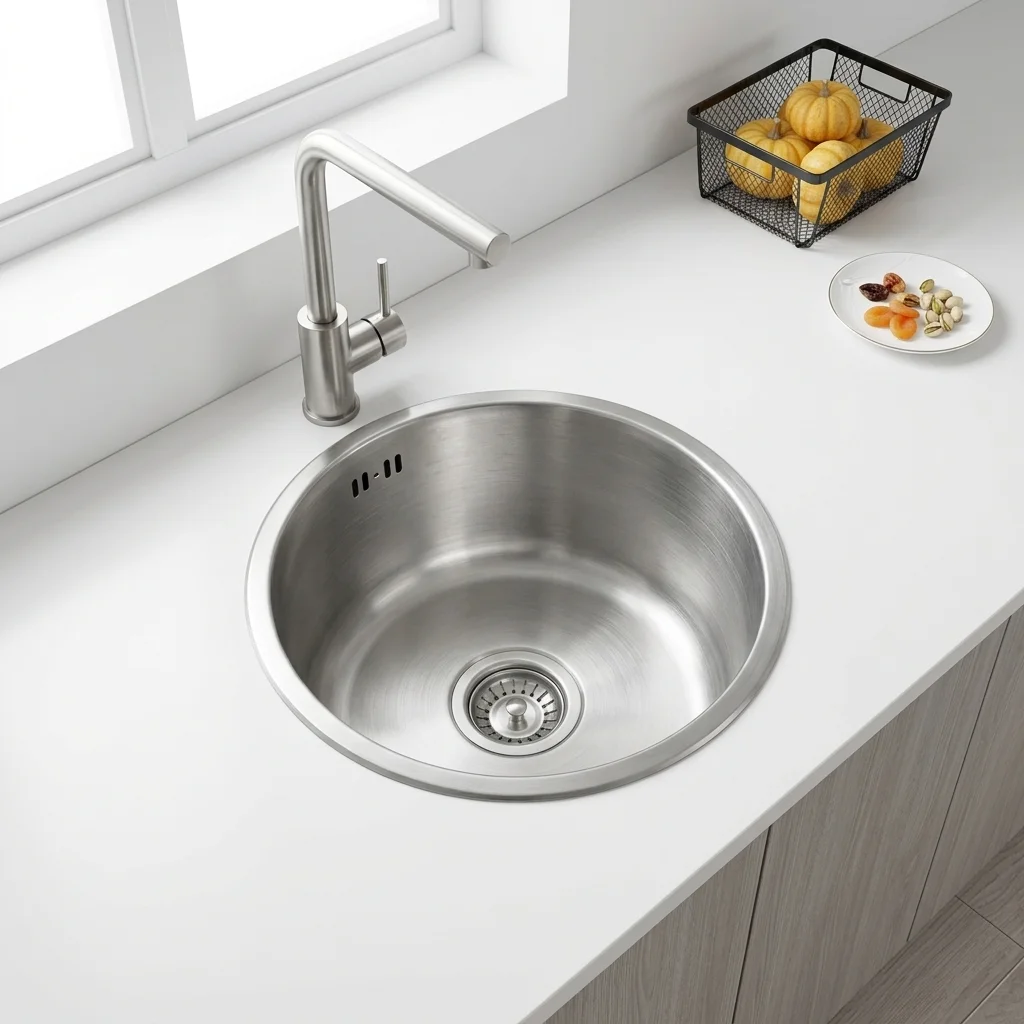
A round kitchen sink can suit compact kitchens, preparation areas, and contemporary interior designs. For distributors, retailers, and project buyers, selecting the right model means evaluating usable capacity, installation requirements, material quality, and supply reliability rather than focusing on appearance alone.
Assess Whether a Round Sink Fits the Kitchen Layout
A circular basin creates a different working area from a rectangular sink. Its curved outline can complement compact countertops, kitchen islands, bar areas, and secondary preparation stations. Without projecting corners, it may also integrate neatly into layouts where countertop space is limited.
However, the rounded shape affects usable capacity. A sink with a wide external diameter may provide less room for rectangular baking trays or large cutting boards than a rectangular model occupying a similar footprint. Buyers should consider the cookware and utensils commonly used by their target customers before deciding which design to stock.
Round basins can be particularly suitable for washing vegetables, rinsing cups, and handling smaller kitchen tasks. In a larger household kitchen, they may work better as a secondary preparation sink than as the only basin for washing substantial cookware. This distinction helps distributors match products to realistic applications instead of presenting every design as suitable for every kitchen.
The surrounding work surface should also influence the decision. A circular sink may create more usable counter space in some compact layouts, but the faucet position and distance from other preparation areas still affect convenience. Buyers serving multiple market segments should evaluate the sink in relation to the complete kitchen configuration.
Compare Diameter, Depth, and Cabinet Requirements
The external diameter is an important starting point, but it does not indicate the entire usable area. Buyers should also check the internal bowl diameter, depth, drain position, and minimum cabinet dimensions listed in the manufacturer’s technical documentation.
A deeper basin can help contain splashes and accommodate taller items, although it may reduce the clearance available beneath the cabinet. The sink must leave enough room for the drain assembly, plumbing connections, and any additional equipment installed below the countertop.
Countertop thickness and installation cutout dimensions also matter. A top-mount model requires an accurately sized opening and adequate rim support. An undermount design needs a compatible countertop and appropriate fixing and sealing arrangements. These requirements should be confirmed before fabrication rather than after the countertop has been cut.
For commercial buyers handling several kitchen projects, reviewing dimension drawings during product selection can reduce installation errors and returns. It also makes it easier to compare products from different manufacturers using consistent measurements. When evaluating quotations, buyers should distinguish external dimensions from the actual basin diameter to avoid comparing models on an inconsistent basis.
Evaluate Material Quality in a Stainless Steel Sink Round Design
A stainless steel sink should be assessed according to its documented material grade, thickness, fabrication quality, and finish. When evaluating a stainless sink round, buyers should pay attention to corrosion resistance, structural durability, and maintenance requirements. Nevertheless, these characteristics depend on the specific material and how the product is manufactured and used.
Type 304 stainless steel is widely used in kitchen sinks because of its resistance to corrosion under normal conditions. Type 316 offers additional resistance in certain corrosive environments, but buyers should not assume that every stainless steel model uses either grade. The exact specification must be confirmed on the relevant product page or technical sheet.
Sheet thickness is another consideration. Thicker material may improve rigidity, but overall performance also depends on bowl geometry, forming processes, reinforcement, and installation support. Comparing thickness measurements in millimeters can help procurement teams assess competing products more consistently. Buyers should also ask whether the quoted thickness refers to the base material or another measured part of the finished sink.
Surface finish affects both appearance and maintenance. A brushed finish can complement modern kitchens, while smooth surfaces may make routine cleaning easier. Buyers should examine the rim, bowl walls, and drain area for consistent workmanship. Clear specifications and sample inspections can help establish quality expectations before a bulk order is approved.
For wholesale procurement, material documentation is especially important when several models look similar but have different specifications. Confirming the grade, finish, and thickness in writing helps reduce substitution risks during repeat orders.
Check Drainage, Faucets, and Maintenance Requirements
A round basin’s drainage design influences everyday usability. The outlet position, bottom slope, and compatible drain fittings should allow water to move toward the outlet when the sink is installed correctly. Buyers should review these details rather than judging drainage performance from product photographs.
Faucet placement deserves equal attention. The spout needs to reach the main working area without causing unnecessary splashing onto the countertop. Depending on the model, the faucet may be installed through the sink deck or directly into the countertop. Hole arrangements and required clearances should be confirmed in advance.
Maintenance requirements should also match the expectations of the target market. Stainless steel can develop water spots or surface scratches during regular use, so appropriate cleaning instructions are useful for retailers and installation partners. Non-abrasive cleaning products and prompt removal of residues can help preserve the finish. Buyers should verify the manufacturer’s care guidance, especially when the product has a specialized coating or surface treatment.
For distributors, clear installation and maintenance documentation can reduce customer enquiries and support requests after delivery. It can also help retailers explain the product’s care requirements accurately, avoiding unrealistic expectations about scratch resistance or stain prevention.
Review Product Options and Supplier Capabilities
For B2B procurement, choosing a suitable design is only part of the decision. Buyers also need to assess consistency between production batches, material availability, packaging, delivery schedules, and after-sales support. These factors influence inventory planning and the ability to complete kitchen projects on time.
AOGLAN presents a comprehensive range of round kitchen sinks that businesses can review when comparing designs and potential sourcing options. Its stated capabilities include in-house R&D and OEM/ODM support. Buyers considering customized products should confirm available dimensions, material specifications, finish options, minimum order quantities, sample procedures, and production lead times directly with the manufacturer.
Reviewing AOGLAN can help buyers compare suitable designs and discuss sourcing requirements.
