
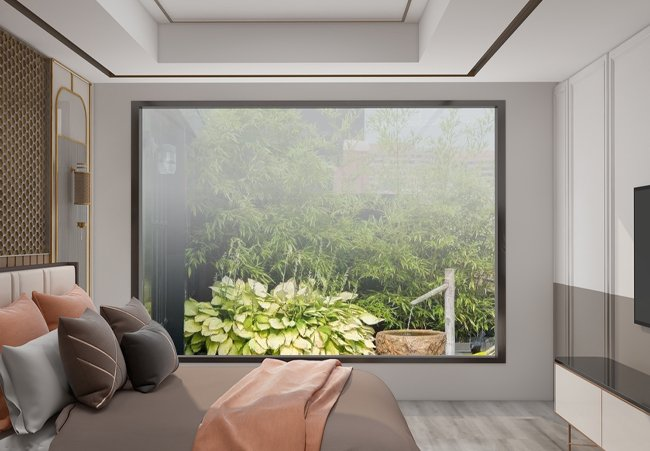
In the world of architectural design, there is a common misconception that aluminum fixed windows are merely “filler” elements—static glass panes that lack the character of operable vents or ornate frames. However, in modern minimalism and high-performance building, simplicity is not a lack of design; it is the ultimate sophistication. When used correctly, fixed glass is the most powerful tool an architect has to frame a landscape and invite natural light into a space.
The Architectural Philosophy of Fixed Glass
The primary purpose of a fixed window is to act as a “picture frame” for the world outside. Unlike operable windows that require bulky sashes, hinges, and handles, fixed systems offer the slimmest possible profiles. This reduction in hardware allows for a “glass-first” aesthetic, where the boundary between the interior and the environment virtually disappears.
From a technical standpoint, the simplicity of fixed windows is their greatest strength. Because they do not open, they provide the highest level of airtightness and water resistance in the industry. There are no seals to wear out from friction and no mechanical parts to fail over time. For high-rise buildings or homes in extreme climates, aluminum fixed windows offer a level of structural integrity and energy efficiency that operable windows simply cannot match.
Enhancing Design Through Engineering
To avoid a “plain” look, modern engineering focuses on the quality of the materials and the precision of the installation. A high-quality fixed glass windows manufacturer will utilize specialized aluminum finishes—such as fluorocarbon coating or textured powder coating—to give the frames a premium, tactile feel. These finishes do more than just add color; they protect the metal from UV degradation and salt spray, ensuring the “simple” look remains pristine for decades.
Furthermore, the design impact of fixed windows is often found in their scale. Because they are not limited by the weight constraints of hinges, fixed panes can be significantly larger than opening windows. This allows for floor-to-ceiling glass walls that transform a room from a closed box into an expansive, light-filled gallery.
Elevating the Aesthetic with Bunniemen
While the concept of a fixed window may seem straightforward, the execution requires an expert hand. Bunniemen has spent 17 years striving to find a balance between industrial strength and minimalist beauty. As a globally renowned manufacturer, they have a 1,000-square-meter warehouse for aluminum profiles and hardware, and a large-scale production base covering 3,500 square meters, capable of providing the precision necessary to transform “simple” glass into architectural masterpieces.
The Bunniemen 65 Series Fixed Window is a testament to this design philosophy. While it may look sleek and understated, its specifications are built for high performance. The 65 Series is made of 1.8-millimeter thick heat-break aluminum profiles. Our high-efficiency fixed windows effectively reduce the transfer of heat between indoors and outdoors, and can increase energy efficiency by 30% to 40%.
The 65 Series is designed to integrate seamlessly with other window types, ensuring a uniform look across a building’s facade. By utilizing high-quality thermal break technology and supporting various glazing options, Bunniemen ensures that these windows aren’t just beautiful to look at—they are also incredibly efficient. For those seeking a fixed glass windows manufacturer that understands how to blend durability with a high-end, modern aesthetic, the 65 Series offers a clean, sophisticated solution that is anything but plain.
